Pepper tree

Definition and stakes

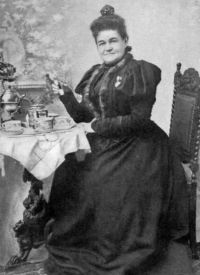
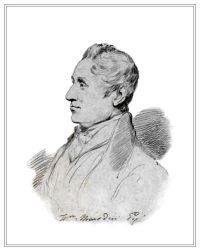
Portrait of Ida Pfeiffer Ida Pfeiffer,  A Woman's Journey Round the World

“ The pepper-tree is a tall bush-like plant, that, when trained and supported with props, will attain a height varying from fifteen to eighteen feet. The pepper grows in small, grape-like bunches, which are first red, then green, and lastly, nearly black. The plant begins to bear in the second year.
White pepper is not a natural production, but is obtained by dipping the black pepper several times in sea-water: this causes it to lose its colour, and become a dirty white. The price of a pikul of white pepper is six dollars (24s.) , whereas that of a pikul of black is only three dollars (12s.)
”

Source: Gutenberg

Various,  Popular Science Monthly (1888)

“ The pepper-tree, with its drooping, graceful, fern-like tops, seems to be always in flower. On the same plant may be seen all stages, from the small flower-buds to the ripe, rose-colored berries. This very popular shade-tree belongs with the sumacs and poison-ivy, and is pervaded with a bitter, milky juice. Various species of acacias were in bloom. Good specimens of phyllodia were obtained from these trees, loaded with their small spheres of fine flowers.
The orange, lemon, and lime, in the genus Citrus, are all examples of plants that may have flowers and ripe fruit at the same time.
”
Source: Wikisource

Walter M. Gibbs,  Spices and How to Know Them

“ In the southwest of India, where pepper grows wild, it is found in rich, moist soil, usually in narrow valleys. It propagates itself by running along on the ground and throwing off shoots every few feet. The natives, in caring for it, merely tie the ends of the vines to trees at distances at least six feet apart, and especially to those having a rough bark, as the vine readily clings to the rough surface of the tree. ”
Source: Gutenberg

Get perspective with Kwize: daily news enlightened by great literature