 Washington Irving,
Rip Van Winkle
(1919)
“ but there was one species of despotism under which he had long groaned, and that was petticoat government. ”
Washington Irving,
Rip Van Winkle
(1919)
“ but there was one species of despotism under which he had long groaned, and that was petticoat government. ”
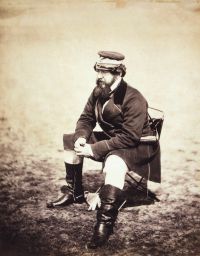 Sir William Howard Russell,
The Civil War in America
“ Pettus, the Governor of the State of Mississippi, according to invitation, and found him in the State House in a very poor room, with broken windows and ragged carpets and dilapidated furniture. He is a grim, silent man, tobacco-ruminant, abrupt-speeched, firmly believing that the state of society in which he exists, wherein there are monthly foul murders perpetrated at the very seat of Government, is the most free and civilized in the world. He is easy of access to all, and men sauntered in and out of his office just as they would walk into a public house. ”
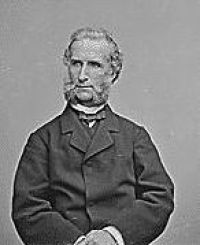 Joseph K. Edgerton,
The Relations of the Federal Government to Slavery
“ John Pettit, late United States Senator from Indiana, has made the broadest assertion of Congressional sovereignty, for he has said and endeavored to prove that it is "absolute, unconditional, unlimited authority"; such, in fact, as would enable the Federal government to sell the citizens of the territories into slavery. Power to do an act is one thing—a constitutional right to do it is another. ”
Alexander L. Peterman, Elements of Civil Government
“ In other words, it is the supreme act of the people, for the purpose of organizing themselves as a body politic, of formulating their government, and of fixing the limits of its power. It is a contract between the whole society as a political body, and each of its members. Each binds himself to the whole body, and the whole body binds itself to each, in order that all may be governed by the same laws for the common good. The constitution of each State is a written instrument, modeled after the Constitution of the United States, with which it must not conflict. ”
 James Fenimore Cooper,
The Headsman; Or, The Abbaye des Vignerons
“ The crowd pressed more closely around the foot of the stage, and Peterchen, assuming a didactic air, resumed his discourse."The object of all authority is to find the means of its own support," continued the bailiff; "for unless it can exist, it must fall to the ground; and you all are sufficiently schooled to know that when a thing becomes of indifferent value, it loses most of its consideration. Thus government is established in order that it may protect itself ”
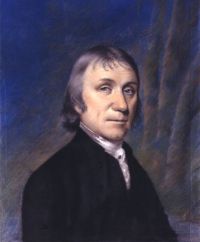 Joseph Priestley,
Essay on the First Principles of Government…
(1771)
“ He might fancy it to be for his own interest to alter them, and to abridge his subjects in their private rights; and, in general, it may be depended upon, that governors will not consult the interest of the people, except it be their own interest too, because governors are but men. But while a number of the people have a share in the legislature, so as to be able to control the supreme magistrate, there is a great probability that things will continue in a good state. For the more political liberty the people have, the safer is their civil liberty. ”
Alexander L. Peterman, Elements of Civil Government
“ The Constitution defines the limits of State and of national power, and thus prevents conflicts of authority which would otherwise arise between the State and the United States. Through the Constitution, the people, who are the sources of all just authority, grant to the government certain powers, and reserve all other powers to themselves. The Constitution prescribes the functions of each department of the government, and thus preserves the liberties of the people by preventing either Congress, the executive department, or the judiciary from exercising powers not granted to it. ”
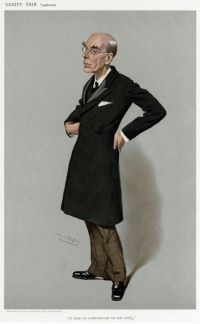 Edmond George Petty-Fitzmaurice,
Life of William, Earl of Shelburne
(1912)
“ In the above supposed posture of public affairs, if Opposition should content itself with whiling away their time in the country till our wretched Parliament meets, not knowing what to wish for or what to do, and above all, leaving it to this Administration to get us out of that storm which in truth they have raised themselves; then we are in my opinion a completely ruined people.—The country will have nobody to look up to. Opposition will in fact be more contemptible and full as criminal as Administration ”
Joseph Priestley,
Essay on the First Principles of Government…
(1771)
“ If all the political power of this country were lodged in the hands of one person, and the government thereby changed into an absolute monarchy, the people would find no difference, provided the same laws, and the same administration, which now subsist, were continued. But then, the people, having no political liberty, would have no security for the continuance of the same laws, and the same administration. They would have no guard for their civil liberty. ”
 François Guizot,
History of the Origin of Representative Government in Europe
“ When, on the contrary, these deliberative bodies themselves are deprived of the rights and means of action which are necessary to them for the fulfilment of their destination, the right of petition becomes an irregular and often violent means by which the public and the legislative chambers endeavour to supply their deficiencies. ”
Joseph K. Edgerton,
The Relations of the Federal Government to Slavery
“ If this doctrine of arbitrary Congressional sovereignty be correct, then have citizens in the territories no constitutional rights, and no franchise except at Congressional discretion—they may be put and kept under martial law as long as Congress pleases, and this without respect to population—they may be sold into slavery according to John Pettit—and this system of military provincial government may be kept up so long as the Federal government can control an army to carry it out. Does any man believe there is any constitutional right in Congress to do any such thing? ”
Joseph Priestley,
Essay on the First Principles of Government…
(1771)
“ All the difference which can arise to states from diversities, in the number or continuance of governors, can only flow from the motives and opportunities, which those different circumstances may give their deputies, of extending, or making a bad use of their power. But whether a people enjoy more or fewer of their natural rights, under any form of government, is a matter of the last importance; and upon this depends, what, I should chuse to call, the civil liberty of the state, as distinct from its political liberty. ”
Alexander L. Peterman, Elements of Civil Government
“ Good laws, good administrations, and the perpetuity of the government itself, depend upon the manner in which the people discharge their public duties. A man who habitually fails to vote and to take interest in the political affairs of his country may be a good man, but he is certainly a bad citizen. ”
L. Carroll Judson, A Biography of the Signers of the Declaration of Independence…
“ It is important, likewise, that the habits of thinking, in a free country, should inspire caution in those intrusted with its administration, to confine themselves within their respective constitutional spheres, avoiding, in the exercise of the power of one department, to encroach upon another. The spirit of encroachment tends to consolidate the powers of all the departments in one, and thus to create, whatever the form of government, a real despotism. ”
 Frederick Douglass,
The Atlantic Monthly
(1866)
“ The Civil Rights Bill and the Freedmen's Bureau Bill and the proposed constitutional amendments, with the amendment already adopted and recognized as the law of the land, do not reach the difficulty, and cannot, unless the whole structure of the government is changed from a government by States to something like a despotic central government, with power to control even the municipal regulations of States, and to make them conform to its own despotic will. ”
 Wilson Lloyd Bevan,
Bevan - Sir William Petty
(1894)
“ Petty's reason for assigning these advantages to labor applied in the production of non-perishable goods is political. He believes in a strong government. He wishes to strengthen the hands of England against her foreign neighbors and set her above possible attack. ”
“ Now this is not of much consequence where the corruption of society, and pretension to be what you are not, is confined to cobblers; but when the guardians of the laws and of the government are only seeming and not real guardians, then see how they turn the State upside down; and on the other hand they alone have the power of giving order and happiness to the State. We mean our guardians to be true saviours and not the destroyers of the State, whereas our opponent is thinking of peasants at a festival, who are enjoying a life of revelry, not of citizens who are doing their duty to the State. ”
Various, Blackwood's Edinburgh Magazine…
“ For the purpose of remedying the distress which was complained of, I would not (exclaimed Mr Caldecott) petition the House of Commons; but if we are to have no protection, let us go thousands in a body to insist upon equality of burdens. We have the power in our own hands. If they will not listen to the voice of reason—if constitutional means will not avail, band yourselves together in a league for withholding the taxes, the tithes, and the poor-rates, (immense cheering,) until the Government do listen to your complaints. ”
 Mrs. H. W. Beecher,
A Biography of Rev. Henry Ward Beecher
“ To keep a half-score of States under federal authority, but without national ties and responsibilities; to oblige the central authority to govern half of the territory of the Union by federal civil officers and by the army, is a policy not only uncongenial to our ideas and principles, but pre-eminently dangerous to the spirit of our government. However humane the ends sought and the motive, it is, in fact, a course of instruction preparing our government to be despotic, and familiarizing the people to a stretch of authority which can never be other than dangerous to liberty. ”
François Guizot,
History of the Origin of Representative Government in Europe
“ A state of crisis could alone lead to such an attempt to destroy the most natural of the right of citizens—the right of addressing the government itself in order to make known to it their desires—and the Charter, reasonably, neither sanctioned nor limited it. The right to which it gave sanction, and which alone now bears the name of the right of petition, is the right of applying to the two Houses of Parliament to urge their interference, either in some matter of general legislation, or for the redress of private grievances. ”
 Carl Schurz,
Speeches, correspondence and political papers of Carl Schurz
(1913)
“ Thus you will do more for the cause of self-government, more to prevent a dangerous centralization of power, you will render a far higher service to this generation and to posterity, than by indulging in those lugubrious wails and lamentations to which you have accustomed us on the floor of the Senate—the lamentation that we are governed by an atrocious despotism because one man shall no longer have the right to deprive another man of his rights ”
William Pitt, Speech of the Right Honourable William Pitt…
“ This concealed poison is now more to be dreaded than any open attempt to support such principles by argument or to enforce them by arms. No society, whatever be its particular form, can long subsist, if this principle is once admitted. In every Government, there must reside somewhere a supreme, absolute, and unlimited authority. ”
Alexander L. Peterman, Elements of Civil Government
“ It is the duty of every voter to study the interests of the country, and to vote for persons and measures that, in his opinion, will best "promote the general welfare." In this country, government is intrusted to the whole people, and they can govern only by expressing their will in elections. ”
William Henry Harrison, William Harrison's Inaugural Address (1841)
“ But the great danger to our institutions does not appear to me to be in a usurpation by the Government of power not granted by the people, but by the accumulation in one of the departments of that which was assigned to others. Limited as are the powers which have been granted, still enough have been granted to constitute a despotism if concentrated in one of the departments. ”
Edmond George Petty-Fitzmaurice,
Life of Sir William Petty 1623 - 1687
(1895)
“ In their hearts they had to acknowledge that if the voice of the people was consulted in a really free Parliament, as they professed to desire, the first popular demand would be one for their own expulsion from the Government, whatever else might follow. ”
Rufus Wheeler Peckham, United States v. Gettysburg Electric Railway Company…
“ And also, in our judgment, the government has the constitutional power to condemn the land for the proposed use. It is, of course, not necessary that the power of condemnation for such purpose be expressly given by the constitution. The right to condemn at all is not so given. It results from the powers that are given, and it is implied because of its necessity, or because it is appropriate in exercising those powers. Congress has power to declare war, and to create and equip armies and navies. It has the great power of taxation, to be exercised for the common defense and general welfare. ”
Jonathan Elliot, Debates in the Several State Conventions on the Adoption of the Federal Constitution (1907)
“ No reasons were required of them; no one dared oppose them; their Veto was supreme! As originally designed, it was emphatically the people's measure, for the people's protection; the necessary balance-wheel, to equalize the powers of the government, which had hitherto been engrossed by the rich, and give the people that interposing check, which the alarming tyranny of the Patricians made necessary. It was the first attempt at a democratic, i.e. a people-ruling institution, and in all its features, save that of unlimited power, shewed the humility of its origin. ”
Olive Tilford Dargan, Lords and Lovers, and Other Dramas
“ It is not in their hands, Gregorief, but in ours, that are yet clean. Do this thing, and it is you, not Petrizoff, who give the greatest blow to freedom. The world is just beginning to understand us——Greg. Yes! Where is that understanding growing strongest? In America. And how does the autocracy propose to meet this new influence? By a secret commercial treaty with the United States. Give any government a pocket interest in the security of another and to the winds with sympathy! ”
“ Would they not, with considerable peremptoriness, desire these intrusively pious members of society to mind their own business? This is precisely what should be said to every government and every public, who have the pretension that no person shall enjoy any pleasure which they think wrong. But if the principle of the pretension be admitted, no one can reasonably object to its being acted on in the sense of the majority, or other preponderating power in the country ”
Alexander L. Peterman, Elements of Civil Government
“ All legal voters of the district have the right to participate in its government by exercising a free choice in the selection of its officers, except in States where these officers are appointed. They have the right to cast their votes without fear or favor. This is one of the most important and sacred rights that freemen possess. Free government can not exist without it. The law guarantees it, and all the power of the State may be employed to maintain it. Therefore, whoever prevents a voter from exercising the right of suffrage does it at his own peril. ”
B. E. Fernow, A Brief History of Forestry
“ Frequent change of administration, or at least the threat of such change, impedes consistent execution of plans; fickle public opinion may subvert at any time well laid plans which take time in maturing; [459] the true democratic doctrine of restricting State activity to police functions, and the doctrine of non-interference with private rights, as well as the idea of State rights in opposition to federal power and authority—all these characteristics of a democratic government are impediments to a concerted action and stable policy. ”
Jonathan Elliot, Debates in the Several State Conventions on the Adoption of the Federal Constitution (1907)
“ It is subversive of every principle of sound policy, to trust the safety of a community with a government totally destitute of the means of protecting itself or its members. Can Congress, after the repeated unequivocal proofs it has experienced of the utter inutility and inefficacy of requisitions, reasonably expect that they would be hereafter effectual or productive? Will not the same local interests, and other causes, militate against a compliance? Whoever hopes the contrary must ever be disappointed. The effect, sir, cannot be changed without a removal of the cause. ”
Alexander L. Peterman, Elements of Civil Government
“ DUTIES.--For every right, the people have a corresponding duty; and for every privilege they enjoy, there is a trust for them to discharge. The large personal freedom possessed by the American citizens imposes equally as large public responsibilities. It is the duty of every citizen to obey the law, to aid in securing justice, to respect authority, to love his country, and to labor for the public good. No one can be a useful member of society unless he respects the laws and institutions of the land. The people themselves have established this government, both State and national ”


