Recessiveness

Definition and stakes

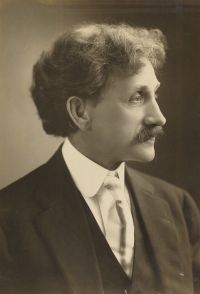
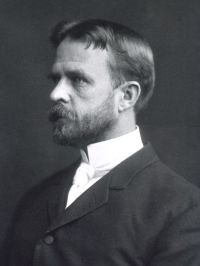
Portrait of Charles Benedict Davenport Charles Benedict Davenport,  Inheritance of Characteristics in Domestic Fowl

“ The reply is elaborated to the effect that, since dominance is due to the presence of a character and recessiveness to its absence, dominance may fail to develop, but recessiveness never can do so. Consequently two extracted recessives mated inter se can not throw the dominant condition; but two imperfect dominants, even though indistinguishable from recessives, will throw dominants. On the other hand, owing to the very fact that the dominant condition often fails of development, two extracted "pure" dominants will, probably always, throw some apparent "recessives." ”
Source: Gutenberg

Michael F. Guyer,  Being Well-Born: An Introduction to Eugenics

“ Likewise, dominance and recessiveness are as much in evidence, for in tracing back pedigrees of various traits we find the same forms of tabulation that obtain for these conditions in plants and lower animals hold good. For typical cases in man let us use a generalized presence-absence formula and the arbitrary symbol A for the presence of the determiner of the character (double in the individual, single in the germ) and a for its absence. ”
Source: Gutenberg

Various,  Popular Science Monthly (1905)

“ Accordingly, any pair of recessive individuals may form the beginning of a pure race of recessives, but in starting a pure race of dominants we must test each animal used, to make sure that it does not contain, unseen, the recessive character. Otherwise we may keep getting mixed lots of offspring. The simplest and surest way of making such a test is to mate the dominant animal with a recessive. For in that case, if the dominant is pure, all the offspring will be dominants; but if the dominant parent is a hybrid, half the offspring will be recessives, half dominants. ”
Source: Wikisource

Get perspective with Kwize: daily news enlightened by great literature