Red pine

Definition and stakes

Julia Ellen Rogers,  Trees Every Child Should Know: Easy Tree Studies for All Seasons of the Year

“ The handsomest of our pitch pines is the red pine, whose dark green leaves are six inches long, and cluster in twos upon the twigs. The bark, the wood, and the bud scales are all red. The cones are from one to three inches long, with thickened scales which have no spines. The tree grows into a broad pyramid, branched to the ground, with stout twigs, and luxuriant foliage. The symmetry and vigour of growth makes this red pine a handsomer tree than the ragged, discouraged-looking pitch pines. It is well for the landscape that its wood is very disappointing. ”
Source: Gutenberg

Julia Ellen Rogers,  Trees Worth Knowing

“ But in cultivation the red pine holds its own for its quick growth, its hardiness, its lusty vigor and its beauty of color contrasts. It grows on sterile ground exposed to the sea, forming groves of great beauty where other pines would languish and die. For shelter belts, inland, it is equally dependable, and as specimen trees in parks and gardens it has few equals. At no season of the year does it lose its fresh look of health. Young trees come readily from seed, and throughout their lives they are unusually free from injuries by insects and fungi. ”
Source: Gutenberg

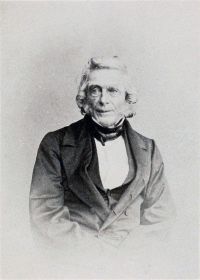
Portrait of Patrick Matthew Patrick Matthew,  On Naval Timber and Arboriculture

“ Our red-wood pine, when come to some age, is in wet ground attacked by rot, which commences in the bulb and adjacent roots and stem, in a manner very similar to the rot in larch. The red-wood also approaches nearer to the outside where this rot exists, and on the side of the tree where the rot is greatest. Most of our planted red pine forest, especially in poor wet tills, and in all flat sandy moorish ground of close subsoil, fall by decay at from 30 to 60 years old. ”
Source: Gutenberg

Get perspective with Kwize: daily news enlightened by great literature