Summary

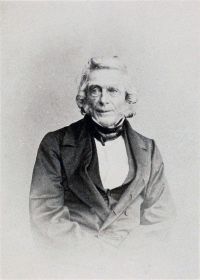
Portrait of Patrick Matthew Patrick Matthew,  On Naval Timber and Arboriculture

“ That Britain is leaving the impress of her energy and morality on a considerable portion of the world, is owing to her having first borne fire and sword over these countries: the husbandman tears up the glebe, with all its covering of weeds and flowers, before he commit his good seed to the earth. Life and death—good and evil—pleasure and pain, are the principles of impulse to the scheme or machine of nature, as heat and cold are to the steam-engine, thus moving in necessary alternate dependence. Our moral sense, our perception and love of good, could not exist without the knowledge of evil ”
Source: Gutenberg

Portrait of Patrick Matthew Patrick Matthew,  On Naval Timber and Arboriculture

“ When we view the advantages of Britain—almost to a wish,—when we view her able and ready to supply the necessities of man in every clime, in exchange for his superfluities, and to scatter science, morality, the arts of life, all that conduces to happiness and improvement over the nations,—when we view all this, being blasted by an exclusive system of monopoly, of very doubtful advantage to one party of the nation, and tyrannically oppressive upon all others, can we refrain from execration? ”
Source: Gutenberg

Portrait of Patrick Matthew Patrick Matthew,  On Naval Timber and Arboriculture

“ We wonder much what fascination can exist to a mind of so much ability and culture as that of Sir Henry Steuart, in decorating a few dull unprofitable acres,—causing a few bushes and bush-like trees to change place from one side of a dull green to the other!—laying digested plans of action, embracing a great number of years, to accomplish this very important feat, which most probably the next heir will make the business of his life to undo, by turning them back to their old quarters, if he does not, with more wisdom, grub them out {228} altogether as cumberers of the soil! ”
Source: Gutenberg

Get perspective with Kwize: daily news enlightened by great literature