Scuta

Definition and stakes

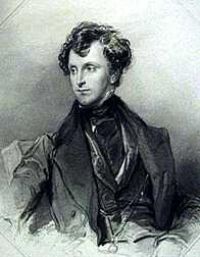
Portrait of Charles Darwin Charles Darwin,  A Monograph on the Sub-class Cirripedia…

“ In S. vulgare the males are attached, often several together, to the extreme edges of the two scuta, and therefore immediately over the orifice leading into the sack; in S. rutilum and ornatum, they are attached in concavities on the under side of both scuta, just above the depression for the adductor scutorum muscle. In the former of these species, the pit for the reception of the male is formed by shelly matter not having been deposited over a certain space on the under side of the valve; and the pit is converted by a covering of membrane into a pouch. ”
Source: Gutenberg

Portrait of Charles Darwin Charles Darwin,  A Monograph on the Sub-class Cirripedia…

“ Scuta.—These valves are important, inasmuch as the animal’s body is attached to them; in Pl. 25, fig. 1, the broken line, surrounding a, b, shows where the body has been cut, in removing the scutum on the near side, the other scutum, S, being left articulated to the tergum, T. In shape the scuta are generally sub-triangular; but in some species of Pyrgoma and in Chelonobia, &c. they are much elongated. ”
Source: Gutenberg

Portrait of Horatio C Wood, Jr. Horatio C Wood, Jr.,  The Myriapoda of North America (1865)

“ The scuta are ornamented, rarely with a white blotch on each side of the mesial line, but generally with two lateral black dots. The first scutum in the female has the anterior margin oblique as to the main axis of the body, and is prolonged laterally so as to form processes, mostly canaliculate, with a rounded border. In the male the anterior margin is at right angles to the axis of the body, and the lateral parallel to it, so that there are no processes. ”
Source: Wikisource

Get perspective with Kwize: daily news enlightened by great literature