Coxa

Definition and stakes

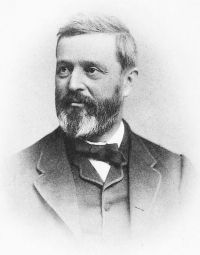
Portrait of James Duncan James Duncan,  The Naturalist's Library (1840)

“ In intimate connection with the coxa, but capable of independent movement, is a small piece named the trochanter. Its form is subject to many changes, but it is most commonly triangular or quadrangular, often prolonged into a lateral point. It articulates with the coxa, sometimes by ball-joints entering corresponding sockets, or simply by a membrane, the latter being generally the case when the shape is annular, as among the Diptera. Its union with the succeeding part of the leg, namely the thigh (femur) , is usually much closer. ”
Source: Wikisource

Various,  Journal of Entomology and Zoology…

“ The long process of the coxa clothed with its long simple hairs seems to have some performance in the work of the mouth parts. The labium is suboval, clothed thickly with simple short hairs, the upper margin having a single row of long heavy straight hairs with many long single curved hairs covering them.
The mandibles are provided with three distinct kinds of hairs or spines. The large subquadrate proximal joint was clothed with long barbed spines, the movable finger having on its median surface a row of fifteen back curved barbed spines.
”
Source: Gutenberg

Portrait of Horatio C Wood, Jr. Horatio C Wood, Jr.,  The Myriapoda of North America (1865)

“ Conjoined and posterior to the coxa of the second cephalic subsegment we will find a large plate (a) articulating with the cephalic scutum by suture; this I take to be the primitive sternum and episternum of the third cephalic subsegment atrophied and fused together; to it the true maxilte are articulated. These consist each of, first an elongated crooked plate (the coxa) articulating with two plates, the exterior of which (the femur) is armed with a tubercle, as in the mandibles, posterior legs, &c.; the inner plate is the tibia ”
Source: Wikisource

Get perspective with Kwize: daily news enlightened by great literature