Setter (dog)

Definition and stakes

Mrs. R. Lee,  Anecdotes of the Habits and Instinct of Animals

“ The sporting dog called the Setter, is distinguished by his long, silky hair, and has consequently been considered as a large spaniel. The head shews an unusual development of brain; and his character for affection and intelligence corresponds with this formation. He is very handsome, is said to have come from Spain to this country, and his original colour to have been deep chestnut, or white. He is now marked with brown, or black, as well as having these colours.
A gentleman in Ireland received a present of a beautiful black setter puppy, from an unknown hand.
”
Source: Gutenberg

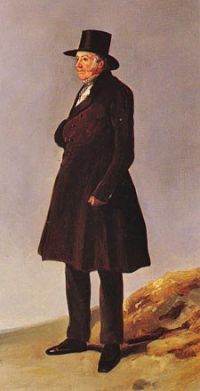
Portrait of William Youatt William Youatt,  The Dog

“ He that has a good one of either breed may be content, but the lineage of that dog must be pure. The setter, with much of the pointer in him, loses something in activity and endurance; and the pointer, crossed with the setter, may have a degree of wildness and obstinacy, not a little annoying to his owner. The setter may be preferable when the ground is hard and rough; for he does not soon become foot-sore. He may even answer the purpose of a springer for pheasants and woodcocks, and may be valuable in recovering a wounded bird. ”
Source: Gutenberg

Dinks,  The Dog

“ Setters do not, to the same degree, alarm birds; and there is, also, this advantage, that they can be employed on all occasions, excepting in low gorse or the closest thickets, whereas spaniels, from their contracted "beat," are nearly useless in the open when game is scarce. You will be prepared, when first you hunt a setter in cover, to sacrifice much of your sport. ”
Source: Gutenberg

Get perspective with Kwize: daily news enlightened by great literature