“ I'll bet right now I can go down to the docks or some place and get a handsome stevedore and make him as big a star as Carrington De Vire in six months!" "Don't be idiotic," laughs Eve. "Imagine a stevedore as a moving picture star!" "Why not?" demands Alex, lookin' like the idea had made a hit with him. "Ain't a stevedore as good as anybody else? I'll bet a thousand dollars even that I can catch one or somebody like him and make him a movie star. What d'ye say?" ”
Stevedore
Definition and stakes
A stevedore is a dockworker responsible for loading and unloading ships, a role that has transformed from manual labor to contemporary operations involving cranes and containers. Historically essential to maritime trade, the profession has undergone significant changes since the 1960s, with automation cutting the workforce by over 90%. Authors such as H. C.
Witwer and Robert Louis Stevenson have portrayed stevedores in literature, emphasizing their physicality and social roles—Witwer envisioning a stevedore’s potential for fame, while Stevenson’s works frequently include porters and stewards in contexts where labor and class dynamics intersect. These depictions illustrate the lasting cultural significance of dockworkers, whose lives continue to be connected to the pace of global commerce, even as technological progress reshapes their work.
Quotes about “stevedore”
Jean Macé, The History of a Mouthful of Bread
“ Thus, the steward gives tiles to the slater, planks to the carpenter, colors to the painter, lime and bricks to the mason—the very same lime that we have in our teeth—in fact, he has got everything that can be wanted in his storehouse, and it is to him that every one applies in time of need.Now our body also is a mansion, and has its steward too. But what a steward—how active! what a universal genius I how inefficient by comparison are the stewards of the greatest lords! He goes, he comes, he is everywhere at once ”
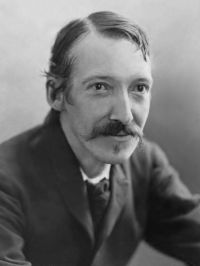 Robert Louis Stevenson,
Kidnapped
(1887)
Robert Louis Stevenson,
Kidnapped
(1887)
“ So he gives the King's three guineas into the man's hand, as if it was his common custom; the three others that came behind him did the same; and there they were on the street, never a penny the better for their pains. Some say it was one, that was the first to fee the King's porter; and some say it was another; but the truth of it is, that it was Duncan Stewart, as I am willing to prove with either sword or pistol. And that was the father that I had, God rest him!" "I think he was not the man to leave you rich," said I. "And that's true," said Alan. ”