Tail (astronomy)

Definition and stakes

Arthur Berry,  A Short History of Astronomy (1898)

“ It is difficult to avoid the inference that the tail is not a permanent part of the comet, but is a stream of matter driven off from it in some way by the action of the sun, and in this respect comparable with the smoke issuing from a chimney. This view is confirmed by the fact that the tail is only developed when the comet approaches the sun, a comet when at a great distance from the sun appearing usually as an indistinct patch of nebulous light, with perhaps a brighter spot representing the nucleus. ”
Source: Wikisource

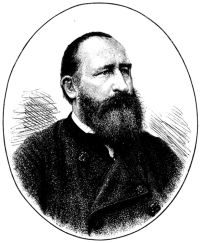
Portrait of Agnes M. Clerke Agnes M. Clerke,  A Popular History of Astronomy During the Nineteenth Century

“ The corresponding initial velocity (for the axis) is 1,500 metres a second, and the resulting appendage a scimitar-like or plumy tail, such as Donati's and Coggia's comets furnished splendid examples of. Tails of the third type are constructed with forces of repulsion from the sun ranging from one-tenth to three-tenths that of his gravity, producing an accelerated movement of attenuated matter from the nucleus, beginning at the leisurely rate of 300 to 600 metres a second. ”
Source: Gutenberg

Get perspective with Kwize: daily news enlightened by great literature