Tar and feathering

Definition and stakes

Edmund Morris,  Ten Acres Enough

“ There would also be great danger of its being imperfectly done, as many worms might escape the search, while the vital power of the tree would be seriously impaired by permitting them to prey upon its bark and juices even for a few months. Prevention would be far cheaper than curing. The offensive odor of the tar will cause the moth to shun the tree and to make her deposits somewhere else; while if any chance to light upon it, they will stick to the tar and there perish, like flies upon a sheet of fly paper. ”
Source: Gutenberg

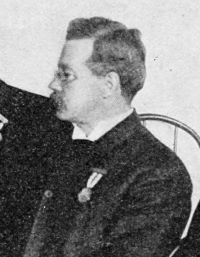
Portrait of William Berryman Scott William Berryman Scott,  A history of land mammals in the Western Hemisphere (1913)

“ Whenever an animal of any kind is caught in the tar, its struggles and cries naturally attract the attention of carnivorous mammals and birds in the immediate vicinity, and the trapped creature acts as a most efficient lure to bring these predaceous animals into the soft tar with it. It is not improbable that a single small bird or mammal struggling in the tar might be the means of entrapping several carnivores, which in turn would naturally serve to attract still others.... ”
Source: Gutenberg

Portrait of William Berryman Scott William Berryman Scott,  A history of land mammals in the Western Hemisphere (1913)

“ Small mammals, birds, or insects running into the soft tar are very quickly rendered helpless by the gummy mass, which binds their feet, and in their struggles soon reaches every part of the body. Around the borders of the pools the tar slowly hardens by the evaporation of the lighter constituents until it becomes as solid as an asphalt pavement. ”
Source: Gutenberg

Get perspective with Kwize: daily news enlightened by great literature