Benzene

Definition and stakes

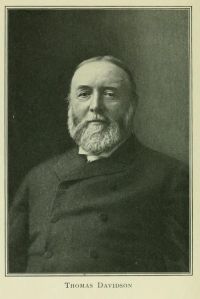
Portrait of Thomas Davidson Thomas Davidson,  Chambers's Twentieth Century Dictionary 1908… (1908)

“ Benzene, ben′zēn, n. a compound of carbon and hydrogen, discovered by Faraday in 1825, in a tarry liquid resulting from the distillation of oil. It is found amongst the products of the destructive distillation of a great many organic bodies, but the most abundant source is coal-tar. It must not be confounded with benzine or benzoyl, which names have at different times been used for benzene.—Ben′zine is the name given to a distillate from American petroleum, which is much used as a substitute for turpentine, and for dissolving oils and fats ”

Source: Wikisource

W. G. Aitchison Robertson,  Aids to Forensic Medicine and Toxicology

“ Benzoline is highly inflammable, and is often called mineral naphtha, petroleum naphtha, and petroleum spirit. Benzoline is not the same as benzene or benzol, which is one of the products of the dry distillation of coal.
From its very general use as a fuel in motor-cars many accidents have happened from inhaling the vapour of petrol. It gives rise to coldness, shallow respiration, syncope, and insensibility, but seldom death.
”
Source: Gutenberg

Alexander Wynter Blyth,  Poisons, Their Effects and Detection

“ The effects of the vapour of benzene have been studied by Eulenberg in experiments on cats and rabbits, and there are also available observations on men [142] who have been accidentally exposed to its influence. From these sources of information, it is evident that the vapour of benzene has a distinctly narcotic effect, while influencing also in a marked degree the spinal cord. There are, as symptoms, noises in the head, convulsive trembling and twitchings of the muscles, with difficulty of breathing. ”
Source: Gutenberg

Get perspective with Kwize: daily news enlightened by great literature