Tidewater

Definition and stakes

Leveson Francis Vernon-Harcourt,  1911 Encyclopædia Britannica (1911)

“ Tidal water is, indeed, unlimited, in volume; but, unlike the drainage waters which must be discharged into the sea, it only flows up rivers where there is a channel and space available for its reception. Consequently, it is possible to exclude the tide by injudicious works, such as the sluices which were erected long ago across the fen rivers to secure the low-lying lands from the inroads of the sea; the tidal influx is also liable to be reduced by accretion in an estuary resulting from training works. ”

Source: Wikisource

James Cook,  Captain Cook's Journal During His First Voyage Round the World (1893)

“ It is well known that where there are deep Inlets, large Creeks, etc., into low lands, that it is not occasioned by fresh water Rivers; there is a very great indraught of the Flood Tide, the direction of which will be determin'd according to the possition or direction of the Coast which forms the Entrance into such Inlets; and this direction the Tide must follow, let it be ever so contrary to their general Course out at Sea, and where the Tides are weak, as they are in general upon this Coast, a large Inlet will, if I may so call it, attract the Flood tide for many Leagues. ”
Source: Wikisource

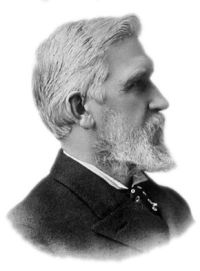
Portrait of Clement Reid Clement Reid,  Submerged forests (1913)

“ The rise and fall of the tide allows sea water to percolate landward and the fresh water to percolate seaward; but the friction is so great as to obliterate most of the tidal wave. Thus the sea at high tide is kept out, the fresh water behind the barrier remaining at a level slightly above that of mean tide, and just above that level we may find a wet soil on which trees can grow. But, and here is the important point, a protected land-surface behind such a barrier can never lie below the level of mean tide ”
Source: Wikisource

Get perspective with Kwize: daily news enlightened by great literature