AI-generated from sources
The flawed man who became Scotland's immortal icon
In Brief
- Robert Burns's legacy is defined by the paradox between his celebrated egalitarian poetry and his acknowledged personal moral failings ('wayward follies').
- His identity as the 'ploughman-poet' established him as an authentic, organic voice for the Scottish working class, integral to the national self-image.
- The posthumous elevation of Burns is a form of secular sanctification, where the transcendent value of his art is used to forgive or overshadow the sins of the man.
- The idolization reflects a societal tendency to apply a different moral standard to genius, prioritizing artistic contribution over conventional morality.
Main authors
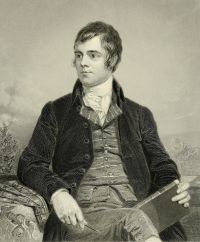
The legacy of Robert Burns presents a significant cultural paradox. He is revered as Scotland's national poet, a figure whose work gave voice to the common person and became inextricably woven into the fabric of national identity [1, 2, 3]. His poetry and songs elevated the lives of ploughmen and peasants, interpreting their world for themselves and for others with a genius that seemed to spring directly from the soil [4]. Yet, the man himself was a figure of profound contradictions, his life marked by what he termed "wayward follies" and an unending internal war between flesh and spirit [5, 6]. This tension between the celebrated artist and the flawed individual raises a crucial question about cultural memory and national identity.
The process by which Burns has been elevated invites an examination of why a nation might choose to effectively canonize a figure with such pronounced moral defects [7]. This phenomenon suggests a form of secular sanctification, where the immense symbolic value of the artist's work comes to overshadow, and in a sense redeem, the sins of the man [8]. The world often makes special allowances for genius, excusing personal weaknesses and moral failings in its most gifted individuals that would not be tolerated in ordinary people [9, 10]. In the case of Burns, Scotland's posthumous embrace seems to have been an act of collective atonement for its earlier neglect, transforming a complicated, struggling man into an uncomplicated national idol .
The Ploughman Poet: Forging a National Voice
Central to the enduring appeal of Robert Burns is his origin as a "ploughman-poet" [11]. This identity is not merely a biographical detail but the very foundation of his connection with the Scottish people. Burns did not write from a position of detached, elite observation; he shared the station and toil of the poorest labourer and gave it dignity and voice . His genius lay in his ability to take the common speech of Scotland, the vernacular of the fields and cottages, and transform it into immortal song [12]. In doing so, he validated the experiences of the working class, making them feel seen and understood in their own language, which he had rendered both musical and glorious .
This perception of authenticity was bolstered by the nature of his genius, which appeared raw and innate rather than cultivated through formal education [13, 14]. Having been largely shielded from the classics, his creative wellspring was the rich, vernacular literary tradition of Scotland, a tradition that was being progressively excluded from cultivated society . His art was seen as a product of nature itself, developing its energies on the farm where he first felt his poetic calling [15]. This narrative of a self-made, natural poet, unindebted to any specific lineage or formal training, reinforced his status as a uniquely Scottish phenomenon, a voice sprung organically from the people .
The cultural impact of his work, especially his songs, was transformative and profound. His verses became so deeply embedded in the collective consciousness that they were considered part of the "mother tongue," not only in Scotland but across the British-speaking world . This linguistic and cultural integration gave him an influence comparable to that of a legislator, shaping the very soul of the nation . It is through the enduring power of his art that Scotland asserts its place among nations, its cultural significance guaranteed by the fact that Robert Burns lived and wrote .
A Spirit at War with Itself: The Paradox of Flawed Genius
Burns himself was under no illusions about his own character. He readily acknowledged his personal failings, casting himself as a "luckless victim of wayward follies" and confessing that he had always been "more fool than knave" . This self-awareness extended to a poignant recognition of his own fractured nature, expressing a desire to be wise and generous while simultaneously identifying as a "ne'er-do-weel" [16]. This constant and interminable internal war was a central feature of his existence, a struggle from which no clear victor emerged during his lifetime .
This inner turmoil is often seen as a characteristic of the man of genius, who by nature frequently exists apart from societal norms [17]. Such figures are often perceived as possessing heightened sensibilities, which in turn expose them to greater temptations . This perception leads to a societal tendency to apply a different moral standard, excusing the weaknesses of the gifted and refusing to impose narrow judgments upon them . The man of genius is often a solitary figure, whose very exceptionalism can put him at odds with the world's conventions [18].
Perspectives on Burns's flaws, however, are not monolithic. Some critics view his connection to "licence and alcoholism" not as a peripheral weakness but as a core element of his poetic identity, arguing that this is a key reason for his lasting fame . In contrast, other biographers argue for a more contextual understanding, suggesting that Burns's excesses were a product of the social customs of his era and that it was a credit to his character that he did not succumb to them completely [19]. This ongoing debate highlights the central tension in his legacy: whether to judge the man for his documented personal failings or for the sincerity and power of his literary output [20].
From Neglect to Idolatry: The Sanctification of a National Symbol
The process of elevating Burns to his current status was far from immediate. During his lifetime, he endured significant hardship, poverty, and a degree of neglect from the nation he would later come to define [21]. Indeed, some view Scotland's treatment of Burns as akin to stoning its own prophet, only to later lament his loss [22]. This period of struggle and adversity is a critical part of his story, framing his genius as something that blossomed despite, not because of, his circumstances .
It was largely in death that Burns's transformation into a national icon began. A sense of collective remorse appears to have prompted a widespread re-evaluation of his life and work, leading to a form of national idolatry . This posthumous veneration involved adopting a "more than charitable" view of his character, effectively smoothing over the rough edges of his biography to create a more palatable hero . This elevation serves a clear national purpose. A nation's character can be judged by the ideals and individuals it chooses to admire, and by canonizing Burns, Scotland celebrated a powerful ideal: the innate genius of the common man rising from humble origins to touch the universal heart [23].
This cultural process mirrors, in a secular sense, the religious concept of sanctification [24]. Sanctification involves a separation, an act of setting apart something or someone for a holy purpose, effectively cleansing it of its impurities . In the case of Burns, his literary genius and symbolic role as the voice of Scotland are separated from his personal sins . The man's complex, flawed biography, a "patchwork" of anecdotes, is subordinated to the perceived sincerity and truth of his writings . The sinner is thus redeemed, not through divine grace, but through the enduring power of his art, which washes away his transgressions in the collective memory of the nation [25].
The enduring reverence for Robert Burns is therefore not a simple act of historical amnesia but a complex and revealing cultural process . It illustrates a powerful tendency to prioritize the transcendent value of artistic genius over the moral accountability of the individual who possesses it . By elevating the "ploughman-poet," Scotland constructed a national narrative that championed authentic, homespun talent and the democratic potential for greatness inherent in its people . The internal war that defined the man's life was posthumously resolved by a nation that chose to immortalize the poet, allowing his art to sanctify his memory .
Ultimately, the sanctification of Burns reveals as much about the needs and values of a nation as it does about the man himself . It speaks to a universal desire for heroes who embody national ideals, even if creating such figures requires a selective reading of history [26]. The flawed man from Ayrshire became a potent symbol because his genius fulfilled a profound cultural need, allowing him to be reborn in memory as the pure, enduring voice of a people . His personal sins were rendered secondary, washed away not by a sacred rite, but by the immortalizing tide of his own songs and the powerful current of a nation's love .