AI-generated from sources
Counting the Bard, How Verse Tests and Critical Taste Fought Over Edward III
In Brief
- Metre is the most calculable feature of verse precisely because it is shared, so it measures a period or a school as readily as an individual author.
- Swinburne, the fiercest enemy of the verse-test, himself inferred Fletcher's collaboration from metre and language, and was later praised as a metrical virtuoso.
- Arguments from quality cut both ways: Shakespeare's own editors, from Johnson to the early 20th century, held that he could write very badly.
- Edward III, built from Painter, Bandello and Holinshed, belongs to a theatre of borrowed plots and patched texts in which single authorship cannot be taken for granted.
Main authors


Few plays have lingered so long at the threshold of the Shakespearean canon as Edward III, an anonymous history whose courtship of a countess and wars in France have tempted and embarrassed generations of readers. Late Victorian criticism already displayed the full range of possible verdicts. Algernon Charles Swinburne refused any Shakespearean hand on the strength of a comparison of quality rather than any document: the existence of Henry V, in his view, was proof enough against the attribution, and he admitted that his essay had drawn fierce attacks [1]. A few years later, Leslie Stephen's entry in the Dictionary of National Biography took a more guarded line, granting Marlowe some claim to a share on grounds of style, describing the play as very uneven, and noting that a single scene had been given to Shakespeare, though only doubtfully [2]. Between flat refusal and the hedged ascription of one scene lies the whole problem of attribution.
The two verdicts rest on different instruments. One measures: it treats style as a set of regularities that can be tabulated, and asks the verse line to testify like a witness under oath. The other judges: it asks whether a passage sounds worthy of the poet, and treats style as a quality that only a trained ear perceives. William Wordsworth, writing in 1800 about poetry in general rather than about disputed plays, had already drawn the line along which the quarrel would run, setting the regularity of metre and rhyme, which lends itself to calculation, against the choices of poetic diction, which escape all reckoning [3]. Edward III poses the question in its sharpest form: can either instrument, on its own, decide who wrote a play, and what does it mean when they disagree?
The Ear Against the Arithmetic
The metrical school owed much of its confidence to Frederick Gard Fleay. According to a 1919 Yale edition of Timon of Athens, Fleay's analysis of that play in 1874 claimed not only to separate a Shakespearean portion from another hand but to establish which had been written first, and a roster of editors including Rolfe, Hudson and Furnivall subscribed to the theory in its main lines [4]. The ambition is remarkable: metre was asked to determine not just who wrote what, but in what order, turning prosody into a chronological instrument. Yet Fleay's own chronicle of Shakespeare's career shows how much such reasoning still leaned on other supports, from the registration dates of sources to political events and to what he presented as the agreement of all competent critics [5]. The tables did not dispense with consensus; they offered themselves as its scientific confirmation.
Swinburne answered with ridicule. To him the metrists, whom he styled scholiasts, were trying to seize the very mystery of Shakespeare through a purely arithmetical procedure, and the nature of the project proved that they lacked the ear it required [6]. His sarcasm turned the method's democratic promise against it: a procedure open to anyone able to count would make every reader a better judge than any poet or scholar of the past, and the so-called verse-test, in his eyes, bore no relation to any genuine principle of rhythm [7]. Behind the mockery lies a serious claim about the nature of verse. For Swinburne, rhythm is not the sum of countable features but a movement perceived as a whole, and a statistic that cannot hear that movement cannot identify the poet who produced it.
The opposition, however, is less clean than the polemic suggests. In the same 1880 study, Swinburne conceded that the metre and language of another disputed play resembled Fletcher's so closely that collaboration was the first inference any novice would draw [8]. He also acknowledged that criticism might do useful work by disproving what is untenable, without being able to put positive proof in its place . That modest programme describes his own case against Edward III rather well, since it rested on a negative comparison with Henry V rather than on demonstration . The ear, in short, also compares metres; it simply declines to write its comparisons down as numbers.
Later assessments of Swinburne's own poetry sharpen the irony. In 1924 John Drinkwater credited him with a metrical genius beyond the reach of any other English poet while judging his rhythmic subtlety slight, and he admitted that separating rhythmic beat from metrical pattern by any rule of thumb was difficult, perhaps impossible [9]. The great enemy of the verse-test was thus remembered as a virtuoso of precisely the dimension the metrists set out to measure. Drinkwater's distinction offers a key to the whole quarrel: the tables capture pattern, the ear claims to capture beat, and neither side could show where one ends and the other begins.
What Metre Can Measure and What It Shares
The theoretical case for counting rests on the regularity that Wordsworth attributed to metre . But regularity cuts two ways. Arthur Schopenhauer described metre and rhyme as both a fetter and a veil, under whose cover the poet is only half responsible for what he says, the form answering for the rest [10]. Transposed to attribution, the remark is unsettling. If metre is partly an impersonal convention speaking through the poet, it records the habits of a period and a school as faithfully as those of an individual. What can be measured most reliably is also what is most widely shared.
Elizabethan blank verse is the clearest case. Leslie Stephen held that all the blank verse of Shakespeare's early plays bore the stamp of Marlowe, and that Richard II and The Merchant of Venice took up subjects Marlowe had already treated [11]. Georg Brandes, reading Richard II against Marlowe's Edward II, saw an imitation that outgrew its model rather than mere dependence [12]. If the younger poet's verse began as a continuation of the elder's, metrical resemblance cannot by itself tell them apart in the early years. The editor of a collection of Robert Greene's plays drew the logical conclusion for Edward III, leaning toward Marlowe on the strength of a sweet-toned blank verse and the total absence of comedy, and placing the work as an early study before Edward II [13]; Stephen likewise allowed Marlowe some pretension on grounds of style .
Arguments from style often turned out to be arguments from character. E. K. Chambers, discussing in 1923 an older anonymous play studded with borrowings from Tamburlaine and Doctor Faustus, set Marlowe aside because he did not repeat himself so flagrantly, and his rivals because they did not plagiarize him in that manner, while noting that Shakespeare was still often credited with a hand in it [14]. The reasoning is psychological rather than arithmetical: it claims to know how each writer behaved toward his own lines and those of others. Stephen, for his part, treated the avoidance of prose in Richard II as a certain mark of early work [15], converting a formal feature into a date. In both cases formal evidence does not speak alone; it is read through a prior theory of the author's temperament or development.
A further difficulty is that form, in drama, serves the scene. Maurice Jonas observed that Shakespeare switches to rhymed couplets and strained conceits when he stages a play within a play, so that an artificial style marks the interlude as artificial, and he dismissed the hunt for individual lines as a profitless sophistication [16]. The courtship scenes of Edward III invite the same caution. The Countess answers the king in neat rhymed couplets, a courtly and ornamental register [17], and Edward's meditation on her beauty piles up anaphoric comparisons with the sun [18]. Counted, such passages yield a proportion of rhyme; read, they may be the deliberate idiom of a love suit. A table cannot tell an author's habit from a character's manner of speech.
Too Good or Too Bad, the Trap of Quality
If counting confuses the individual with the period, taste confuses the author with his best work. Swinburne's dismissal of Edward III assumed that the poet of Henry V could not descend to its level . Yet the same critic, writing on another Elizabethan dramatist in The Age of Shakespeare, portrayed a writer whose finest passages are regularly followed by lapses into crudity or bombast worthy of a novice, as though a malign double took turns with him [19]. Unevenness, in that portrait, is the signature of a single hand, not the proof of several. Stephen's description of Edward III as a play of very unequal merit is therefore ambiguous evidence: it may point to collaboration, or to one writer on uneven days.
Shakespeare's own editors had long weakened the assumption that he could not write badly. Samuel Johnson's preface, reprinted in the 1778 edition, held that his works were never brought to his own idea of perfection, and that what satisfied the audience satisfied the writer [20]. More than a century later, a 1900 editor of Romeo and Juliet went further, arguing that the young Shakespeare could write very ill and, within the same play, as admirably as in his noblest passages [21]. The eleventh edition of the Britannica called him supreme but not infallible, a poet whose verse is at times strained and shattered, reaching beauty only through discord [22]. Once quality is allowed to vary inside the canon, the claim that a passage is too weak to be his loses its force, and so does the claim that a passage is too fine to be anyone else's.
The ear nonetheless holds a power the tables cannot match: it can hear a voice emerging. Brandes, comparing Richard II with Marlowe, located the precise point where comparison ceased to apply, the dying Gaunt's patriotic outburst, whose self-controlled vehemence he set above Marlowe's wild magniloquence [23], and whose vitality contrasted, in his reading, with a Marlovian manner he found monotonously dry . This is the kind of judgment counting cannot produce: not a frequency but a change of temperature. Its weakness is just as plain. The verdict depends on terms such as vitality, vehemence and equipoise, which no second reader is obliged to share.
Behind both instruments lies a prior question: does Shakespeare leave a recognizable personal mark at all? Nineteenth-century commentators answered in opposite ways. An anthology of world literature held that he concealed himself so thoroughly that he cannot be found in his writing [24], whereas a Catholic review of the 1860s claimed that no author had ever poured his whole soul so completely into every line [25]. A third essay, collected in an anthology of great books, praised him for having no peculiarity and no mannerism [26]. If that last view is right, the attributor's task is close to impossible: a writer without mannerisms leaves few countable tics, and a writer present everywhere can only be detected by an intuition no one can verify.
A Workshop Without Signatures
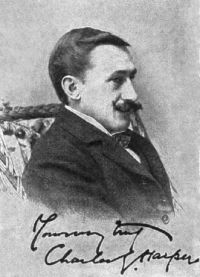
Both methods share an assumption that the period's own accounts undermine: that a play has a single author whose style can be isolated. Charles G. Harper described Shakespeare's beginnings as those of a hack writer who patched existing plays, at a time when authors had no remedy against such alteration [27]. The editor of Painter's Palace of Pleasure stressed how rarely Elizabethan dramatists invented their plots, Shakespeare no more than the humblest of his fellows [28]. Edward III fits this economy closely: its romantic episode came from Painter and ultimately from Bandello, its history from Holinshed . A text assembled from borrowed stories, and possibly reworked by several hands, may carry several styles at once; asking whose it is may be asking the wrong question.
The most tempting evidence in such cases is neither metrical nor purely aesthetic but verbal. In the king's meditation on the Countess, the sun is said to shine on the basest weed as warmly as on the rose ; in a sonnet printed in 1609, the basest weed outbraves the dignity of a corrupted flower [29]. A shared image of this kind can be read as the habit of one mind, as a borrowing between texts, or as the common stock of an age fond of flowers and weeds. It has the precision of a count and the immediacy of the ear, and for that reason it reveals how attribution actually proceeds: by an accumulation of small convergences, none of them decisive.
A Victorian novel by James Payn captured the mood of such inquiries. One of its characters, confronted with a newly surfaced play, cannot decide from internal evidence whether it is Shakespeare's, leans on the whole toward yes, and finds the real stumbling block in the mystery surrounding its discovery [30]. The fiction makes a point the critics rarely conceded: internal evidence, whether counted or heard, seldom closes a case without an external story that makes the attribution plausible. In its absence, tables and taste alike yield only probabilities, and the temperature of the debate, of which Swinburne's contempt for his assailants is one example , fills the space left by proof.
What these sources leave is a suspended verdict. Stephen's doubtful scene , the Greene editor's Marlovian hypothesis , Swinburne's flat refusal and Chambers's remark that Shakespeare was still often credited with a hand in disputed older work each rest on a different weighting of measure and judgment. Seen through these documents, the canon is less a fixed list than a negotiation in which each instrument checks the excesses of the other: the count disciplines the enthusiasm of the ear, and the ear exposes what the count mistakes for a signature.
The quarrel over Edward III sets two instruments with complementary blind spots side by side. Metre is calculable because it is shared, from the regularity Wordsworth described in 1800 to the Marlovian stamp Stephen found on Shakespeare's early verse nearly a century later, and so it measures periods and schools as readily as individuals . Taste is discriminating because it is personal, and so it confuses the author with his best moments, even though editors from Johnson in the 18th century to a 1900 editor of Romeo and Juliet insisted that Shakespeare could write badly . The idea that a play enters the canon once tables and ear agree must therefore be qualified: on this evidence, agreement is a necessary condition rather than a mechanism, and even agreement presupposes a single author that Elizabethan theatre practice rarely guaranteed .
The more lasting lesson concerns what attribution reveals about reading itself. Each method carries an image of the poet: for the metrist, a set of habits evolving across a career ; for the critic, a voice that rises above its models . Edward III, with its uneven brilliance and its borrowed plots, fits neither image comfortably, and that discomfort is instructive. A disputed play forces its readers to state what they believe makes Shakespeare Shakespeare, and to discover how much of that belief neither counting nor listening can prove.