AI-generated from sources
The conflict between page and stage: authority, compromise, and the transformation of dramatic art
In Brief
- The transition from a poet's singular, stable text to a theatrical performance is a radical transformation that inherently risks the author's original artistic control.
- The stage introduces inevitable compromises, where commercial constraints and the demands of production often override literary merit and the author's intent.
- The actor functions paradoxically as both the essential interpreter and a potential usurper, injecting personal vision that modifies the playwright's textual design.
- Live theatre prioritizes the audience's immediate, emotional experience over the intellectual appreciation and detailed structure afforded by reading the original literary text.
Main authors

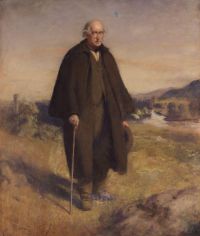
The journey of a dramatic work from the solitary mind of the poet to the populated space of the stage is one of fraught transformation. It marks a fundamental shift from a singular, stable text into a fluid, collaborative, and embodied event [1]. This transition raises a central and enduring conflict in the dramatic arts: does the performance serve as the ultimate fulfillment of the poet's vision, or does it inevitably dilute and corrupt it? The text, a product of isolated imagination and linguistic precision, is subjected to a multitude of external forces—the financial pragmatism of managers, the interpretive personalities of actors, the mechanical limitations of the stage, and the unpredictable emotions of an audience [2, 3, 4]. The poet's creation, once autonomous, becomes a blueprint for a collective enterprise, where its original intent must contend with the myriad realities of production [5].
At the heart of this confrontation lies a question of authority. Is the definitive version of a play the one that exists on the page, a carefully constructed literary artifact whose nuances are best appreciated through quiet reading [6]? Or is the true play the one that lives for a few hours in the theatre, a sensory experience brought into being by the unique alchemy of performers and spectators [7, 8]? The poet's art involves concentrating action and excising the extraneous to create a focused narrative [9], while the theatrical art introduces a host of new variables, from the actor's elocution to the stage manager's lighting cues [10, 11]. This process of translation from one medium to another is never seamless; it is a complex negotiation where the author's original conception is at once realized and risked, elevated by the actor's art in one moment and potentially betrayed by it in the next [12]. The exit of the author from the creative process marks the entrance of a host of interpreters, each leaving their mark on the final product [13, 14].
The Poet's Page as Sacred Text
The conception of a dramatic work begins as an act of profound interiority, a product of a mind that may have staked its very happiness on its own imagination [15]. The poet's office is to portray, not to dissect, creating a world through feeling and intensity that may well be indicative of a life's defining tragedy or joy [16, 17]. This initial creation is an act of selection and concentration, where the author carefully separates essential actions from the clutter of daily life to build a potent, self-contained narrative . In this view, the text is not merely a script awaiting activation; it is a complete work of art whose literary merits and stylistic properties stand on their own [18]. The author's voice is the primary force, and any translation or adaptation that adds layers of interpretation—from a new time period or a different artist—risks confounding the original clarity [19].
The public presentation of the author is secondary, even irrelevant, to the integrity of the work itself [20]. The dramatic poet, like a novelist or historian, is not obligated to perform; the text is the final testament . Indeed, some perspectives suggest a fundamental incompatibility between the poet's internal, reflective art and the external, analytical nature of performance . The very process of writing can be an all-consuming act, draining the author of the energy needed for the public-facing world of theatre [21]. This romantic notion of authorship posits that the deepest truths of a work are embedded in its language and structure, accessible to a reader without the need for mediation . The text becomes a sacred object, and the most faithful interpretation requires shutting out the noise of subsequent stage traditions to find inspiration solely within the author's original words [22].
Furthermore, there is a point in the creative process where even the author's control becomes tenuous, as the characters themselves seem to acquire their own volition [23]. As the poet's own life recedes from the experiences depicted, the work begins to take on a dramatic quality, viewed almost as if it were another's creation [24]. This suggests that the text possesses an internal logic and life that precedes any performance. The audience's expectation, stoked before a work is even released, can create an pressure that is fatal to the author's reputation if not perfectly met, underscoring the delicate relationship between the private creation and its public reception [25]. The poet, therefore, often assists in the depiction of great passion more as a historian than an actor, chronicling events from a necessary distance [26].
The Stage: A World of Inevitable Compromise
Once the manuscript leaves the author's desk, it enters a complex and often brutal ecosystem governed by forces far removed from poetic inspiration . Theatrical production is a commercial enterprise where artistic possibility must frequently yield to financial advisability [27]. The need to construct scenery, manage lighting, and generate sound effects imposes practical and monetary constraints that can dictate the viability of a play, regardless of its literary merit . This commercial reality means a work might fail not from a lack of dramatic instinct in the writing, but from a confluence of factors including production values, casting, or even the mood of the audience on a given night [28].
The figure of the theatre manager embodies this tension between art and commerce. Historically, managers have been characterized as individuals for whom actors are merely instruments for generating profit, with little regard for artistic integrity or the author's intentions . A manager might pay a substantial sum for the rights to a play, viewing it as a property to be exploited rather than a vision to be honored [29]. This can lead to profound artistic compromises, such as when an author is pressured to alter a logical tragic ending to a forced happy one, purely to satisfy a perceived audience preference [30]. Such actions represent a betrayal of both the art form and the author's own truth . The theatre, therefore, can become less a temple of art and more a 'house of correction for morals' or simply a business that must start on time, empty or full [31].
The very structure of a theatrical production necessitates a departure from the author's pure text. Stage versions historically have involved the mutilation of the original fable, the omission of scenes and characters, and the interpolation of pictorial effects not intended by the poet . The official acting versions of classic plays, for instance, are often significant abbreviations of the complete texts [32]. The final entertainment witnessed by an audience is the result of a complicated translation from a messy, personal manuscript into a polished public spectacle . This process can be so fraught with potential failure that disputes often arise between authors and actors, each blaming the other when a work does not succeed on stage . The author's carefully crafted words become just one element in a vast, collaborative machine .
The Actor: Interpreter, Co-Creator, and Usurper
At the center of the theatrical transformation stands the actor, an artistic interpreter who embodies the 'aery conceptions of the poet' . This role is inherently paradoxical. On one hand, the actor is a medium, whose success can be measured by the ability to channel the author's intent. A truly intelligent interpretation is seen by some as requiring a purification of method, a return to the author's text as the sole source of inspiration, free from the accretions of stage history . An actor's duty is not to defend a personal conception of a character if it is at variance with the author's words . The great actor's special privilege is to supply a form of actual experience for the audience, making what might seem ludicrous in a book feel real and true when presented with the force of nature .
However, the actor is never a purely transparent medium. Interpretation is not a science; the most detailed script cannot perfectly dictate every shade of accent and inflection, which must ultimately be left to the 'taste, insight, and temperament of the individual performer' [33]. The intrusion of the actor's personality is an unavoidable, and often enriching, aspect of performance, adding a new color to the written page and modifying the intended balance of the author's design . In this dynamic, the playwright depends on the actor for much of the characterization, relying on them to use a few broad strokes to make a character live, especially in shorter forms [34]. The relationship becomes a partnership, albeit an unequal one, where the author provides a sketch that the actor must then fill .
This partnership can easily curdle into conflict. A conscientious actor may be disconcerted by critics in the audience following along with the author's text, a practice that highlights every deviation [35]. The actor's interpretation can become so powerful that it creates a new reality, one that might be at odds with the original. When an actor rises to true greatness, they ascend from being a mere interpreter to becoming a co-creator, introducing a personal vision that competes with the author's . This is compounded by theatrical conventions, such as artificial elocution, which can further distance the performance from the poet's verse . The result is often a hybrid creation, a 'pseudo-classical' drama that belongs neither wholly to the author nor to the time in which it was written .
The Audience and the Primacy of Emotion
The final arbiter of a play's meaning is the audience, whose experience in the theatre is fundamentally different from that of a solitary reader. The stage exerts a powerful, almost 'deadly influence,' creating a state of emotional excitement that can be difficult to control [36]. A thrilling scene can provoke visceral physical reactions—clenched hands, tears, uproarious laughter—transforming the intellectual appreciation of a text into a full-body experience . This emotional immediacy is the unique power of theatre. A story rooted deep in human feeling can be conveyed powerfully through pantomime alone, with words serving only as embellishment [37]. The success of a performance is ultimately judged by its magnetic effect on those watching, an effect that can render critiques of an actor's mannerisms irrelevant in the face of raw stage presence [38].
This reliance on emotional impact carries its own risks for the author's work. Theatrical language can devolve into 'magnificent rhetoric' and 'rants' where the violence of the manner contrasts with the tameness of the thought, appealing to the senses rather than the intellect [39]. The need to engage a live audience can privilege spectacle and high emotion over the subtle, detailed storytelling more suited to a novel or poem [40]. The poet's careful layering of meaning can be lost in a performance designed to elicit an immediate, powerful response. The aesthetic experience is no longer solely about understanding the author's prose but about being swept up in a shared, public event .
Ultimately, the theatrical event is a complex interplay of forces where the author's text is the starting point, not the final word. The success of a play depends on a precarious alignment of a pleasing theme, effective acting, and skillful production, all filtered through the sensibilities of a particular audience . The responsibility for any perceived failure of meaning can be difficult to assign, resting somewhere between the author's expression and the audience's intuition [41]. The poet who writes for the stage must contend with the reality that their work will be completed not in the quiet of their study, but in the unpredictable, emotionally charged, and ultimately ephemeral space of the theatre.
The journey from page to stage is less a simple act of translation than a radical reinvention. The solitary authority of the poet is necessarily relinquished to a collective of artists and technicians, each contributing a layer of interpretation . While purists may argue for the singular truth of the author's text, advocating a return to the words alone for inspiration , the very nature of theatre is collaborative and interpretive. The actor cannot be a flawless conduit; their personality, skill, and even their physical presence become inseparable from the character they portray, creating a hybrid entity that is both faithful to and divergent from the original script . This process is not inherently a corruption but a distinct art form, one that trades the permanence and precision of literature for the immediacy and emotional power of live performance .
Consequently, the conflict is not one that can be definitively resolved in favor of either the page or the stage. They are fundamentally different modes of experiencing a dramatic story. The poet's text remains a work of literature, a permanent artifact to be studied and appreciated for its linguistic and structural merits . The performance, by contrast, is an ephemeral event, a unique convergence of text, actor, and audience that can never be perfectly replicated . To condemn the stage for failing to be a perfect mirror of the page is to mistake its purpose. The theatre does not merely reproduce the poet's work; it uses it as a catalyst to create a new, sensory reality, one in which the author's initial vision is simultaneously honored, challenged, and ultimately transformed .