AI-generated from sources
Witchcraft as theology, anthropology, and psychosis: The enduring debate on historical belief
In Brief
- Historically, witchcraft was treated as a literal theological reality: a diabolical pact and a grave crime against God, leading to the suspension of standard legal evidence.
- The anthropological hypothesis, notably the 'Dianic cult' theory, views persecuted witches as adherents to the misunderstood remnants of an organized, pre-Christian fertility religion.
- Modern, secular interpretations analyze witch hunts primarily as a psycho-social phenomenon fueled by mass anxiety, societal misogyny, poverty, and collective ignorance.
- The ongoing debate over witchcraft reflects a major transition in Western consciousness, shifting from supernatural explanations toward analysis based on history, sociology, and psychology.
Main authors
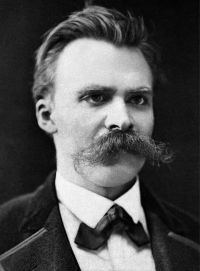
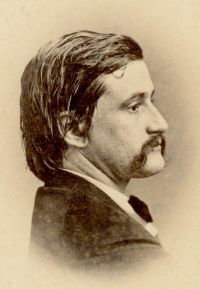
The historical phenomenon of witchcraft presents a formidable intellectual challenge, a subject so complex that it resists any single, simple explanation [1]. For centuries, it has been a focal point for theologians, judges, philosophers, and, more recently, anthropologists, all attempting to comprehend the nature of the beliefs and the causes of the persecutions that swept across Europe and its colonies [2, 3]. This enduring fascination stems from a fundamental conflict in interpretation, a schism in how we understand evidence, belief, and the very fabric of reality in past societies [4]. The question is not merely what people believed, but why those beliefs held such terrifying power and what they reveal about the societies that held them [5, 6].
The debate over witchcraft oscillates between two primary poles of explanation. On one side stands the historical, theological perspective which accepted the witch's pact with the devil as a literal and provable fact, substantiated by a vast body of confessions and eyewitness testimony [7]. This view posits witchcraft as a genuine spiritual threat, a concrete conspiracy against God and humanity [8]. On the other side are modern, secular interpretations that dismiss supernatural claims, explaining the phenomenon instead as a confluence of social and psychological factors: mass hysteria, deliberate fraud, deeply rooted misogyny, or the misunderstood survival of an ancient folk religion [9, 10]. This fundamental disagreement transforms the study of witchcraft from a simple historical inquiry into a profound exploration of the shifting foundations of Western thought, from a world governed by supernatural forces to one understood through social science [11].
The Theological Reality of the Diabolical Pact
For much of its history, witchcraft was not considered a delusion but a concrete theological and legal reality [12]. The core of this belief was the concept of a formal pact with Satan, a covenant that made an individual a willing agent of evil in the world [13]. This was no mere superstition; it was a crime against God and humanity, codified in law and prosecuted with religious fervor [14]. The entire worldview of the time was predicated on a cosmic struggle between divine and demonic forces, with humanity as the battlefield [15]. Within this framework, the witch was the ultimate enemy, a traitor who had willingly joined the forces of darkness, making the eradication of their influence a spiritual and civic duty .
This theological certainty had profound consequences, arguably stalling intellectual progress for centuries by prioritizing the prosecution of heresy and witchcraft over other forms of inquiry [16, 17]. The very concept of the individual soul as an entity to be saved or damned, a cornerstone of Christian thought, lent the diabolical compact its terrifying significance [18]. The legal systems of the period adapted to this perceived threat, creating a framework where normal standards of evidence were often suspended [19]. In trials dealing with Satan, procedural scruples were seen as unnecessary luxuries, and the rules for witnesses were relaxed to ensure conviction [20]. The result was a self-perpetuating system of persecution fueled by a deep-seated fear of an invisible, demonic enemy .
The proof of this diabolical pact was sought in both testimony and on the physical body. Courts took confessions of sexual intercourse with the Devil as literal evidence, even when they included bizarre details, such as the infernal seed being perpetually cold [21]. Such accounts were used to refute suggestions that the accused were simply suffering from hysteria or hallucinations . Physical examinations were also conducted to find the 'witch's mark' or a 'preternatural teat,' considered a sign that the accused had suckled a demonic familiar [22]. The combination of these confessions, spectral evidence, and physical marks created a body of what was considered at the time to be irrefragable evidence, confirming the reality of a vast satanic conspiracy [23].
The Anthropological Hypothesis: An Ancient Pre-Christian Religion
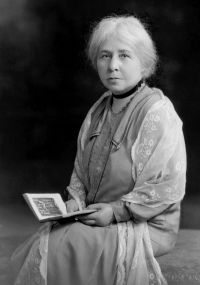
A radical reinterpretation of the witchcraft phenomenon emerged in the 20th century, proposing that what the authorities persecuted was not Devil worship but the surviving remnants of a pre-Christian European religion . This theory posits the existence of an organized, ancient faith, which its proponents term the 'Dianic cult,' centered on a horned, anthropomorphic god and focused primarily on ensuring fertility [24]. According to this view, the church and secular authorities fundamentally misinterpreted the rituals and beliefs of this older cult, recasting its nature god as the Christian Devil and its followers as malevolent sorcerers .
Proponents of this hypothesis find evidence for it within the very confessions of accused witches. The gatherings, or 'Sabbaths,' are seen not as chaotic orgies but as structured religious services where spells were worked and instructions were given by a leader, the incarnate god [25]. The recurring focus on the fertility of people, animals, and crops in papal bulls and trial records is interpreted as proof that the cult's primary purpose was life-affirming, not destructive [26]. Even fantastic elements of the testimony, such as flying through the air on beasts or sticks to meet with the goddess Diana, are traced back to pagan beliefs documented in ecclesiastical law centuries before the major witch hunts [27, 28]. In this light, the executed witch becomes not a villain but a martyr, dying for a faith that was systematically demonized and destroyed [29].
Witchcraft as Psycho-Social Phenomenon
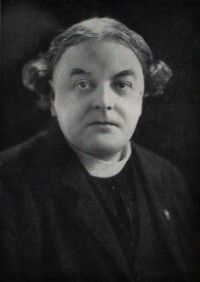
The theory of an ancient surviving cult has faced significant criticism. Scholars such as Montague Summers have forcefully argued that this anthropological explanation is a fundamental error, contending that witchcraft was not a misunderstood pagan religion but a genuine and pernicious heresy rooted in Gnostic and Manichaean dualism [30, 31]. In this view, witchcraft was precisely what the theologians claimed: the worship of the principle of evil, a true form of Satanism [32]. These critics insist that the subject cannot be understood through the lens of anthropology alone and requires deep theological training to grasp its heretical nature .
Beyond this theological counter-argument, the dominant modern approach is to analyze witchcraft as a psycho-social phenomenon . This perspective sets aside the question of supernatural reality to investigate the material and mental conditions that fostered the belief [33]. Historians have pointed to a convergence of factors, suggesting the archetype of the witch arose from a nexus of poverty, old age, and widespread ignorance [34]. The witch hunt epidemic is sometimes framed as a collective 'mental disease,' an expression of the anxieties and repressions simmering within a society of 'crushed brains' . This societal pressure was often directed at women, with church asceticism fostering a sex antagonism that cast woman as the archetypal temptress, using her natural allure and supposed charms to lead men to damnation [35].
Within this framework, individual psychology also plays a crucial role. A person accused of witchcraft, often a marginalized woman sought out for folk remedies, could be tempted by the belief others had in her power, eventually coming to believe in it herself [36, 37]. Simultaneously, the element of outright fraud cannot be discounted, with many accusations likely stemming from fabricated stories, charlatanism, or the zeal of ministers eager to find diabolical influence in any strange occurrence [38]. Some establishments offering fortune-telling even served as fronts for organized criminal activities, further muddying the waters [39, 40]. Yet, even with clear instances of fraud, some argue that dismissing the entire body of evidence as delusion or deceit is a simplistic denial of thousands of consistent accounts .
The historical reality of witchcraft emerges not from a single explanation but from the complex intersection of these competing interpretations. It was simultaneously a deeply held theological doctrine defining humanity's struggle against a literal Satan , a set of folk practices that may have been remnants of older traditions violently misunderstood by a hostile dominant religion , and a powerful social psychosis fueled by ignorance, misogyny, and fear . The enduring debate itself charts a major shift in Western consciousness, away from a world explained by divine and demonic agency toward one analyzed through the more terrestrial forces of history, anthropology, and psychology .
Ultimately, the study of witchcraft forces a confrontation with the very nature of belief and the construction of reality . The crucial question is not whether witches could fly or if their Devil was real, but what social, mental, and theological conditions created a world in which these beliefs were plausible, rational, and lethally powerful . This evolution in questioning—from a legal problem of guilt and innocence to a historical and psychological problem of belief formation—marks a profound transition in our understanding of the past and of the human mind itself . The witch trials stand as a stark reminder of the devastating consequences of a reality built on faith, fear, and the systematic suppression of doubt .