Benjamin R. Curtis

Biographical details

Benjamin R. Curtis,  Dred Scott v. Sandford — Dissenting Opinion (1857)

“ By a treaty with a foreign nation, the United States may rightfully stipulate that the Congress will or will not exercise its legislative power in some particular manner, on some particular subject. Such promises, when made, should be voluntarily kept, with the most scrupulous good faith. But that a treaty with a foreign nation can deprive the Congress of any part of the legislative power conferred by the people, so that it no longer can legislate as it was empowered by the Constitution to do, I more than doubt. ”
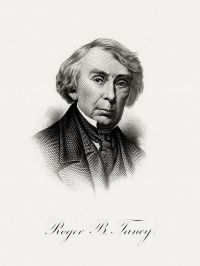
Source: Wikisource

Benjamin R. Curtis,  Dred Scott v. Sandford — Dissenting Opinion (1857)

“ There is nothing in the context which qualifies the grant of power. The regulations must be 'respecting the territory.' An enactment that slavery may or may not exist there, is a regulation respecting the territory. Regulations must be needful; but it is necessarily left to the legislative discretion to determine whether a law be needful. No other clause of the Constitution has been referred to at the bar, or has been seen by me, which imposes any restriction or makes any exception concerning the power of Congress to allow or prohibit slavery in the territory belonging to the United States. ”
Source: Wikisource

Benjamin R. Curtis,  Dred Scott v. Sandford — Dissenting Opinion (1857)

“ What, then, shall we say of the consent of the master, that the slave may contract a lawful marriage, attended with all the civil rights and duties which belong to that relation; that he may enter into a relation which none but a free man can assume-a relation which involves not only the rights and duties of the slave, but those of the other party to the contract, and of their descendants to the remotest generation? ”
Source: Wikisource

Get perspective with Kwize: daily news enlightened by great literature