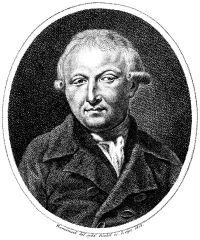
“ The life and character of John Sebastian Bach have a peculiar interest, not only for musicians and amateurs of music, but for every one who can appreciate sterling worth, combined with genius of the highest rank, and a modesty as great as it is rare. “Anyone,” said Bach, “could do as much as I have done if he worked as hard.” And this capacity for hard work is perhaps not the least among the many remarkable characteristics of the man. We find in him little of that desire for applause, for recognition, which is usually one of the strongest motives in an artist. ”
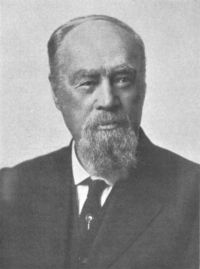
C. F. Abdy Williams
Biographical details
C. F. Abdy Williams, a renowned English biographer and music scholar, is best known for his in-depth study of Johann Sebastian Bach, encapsulated in his seminal work Bach. His writings emphasize the convergence of religious devotion and musical excellence, highlighting Bach’s steadfast dedication to technical accuracy, spiritual profundity, and the ethical dimension of artistic creation.
Through careful examination of Bach’s compositions, Williams illustrates the composer’s capacity to blend strict form with pious expression, providing insights into a legacy that continues to echo in both academic and musical communities.
Quotes by C. F. Abdy Williams
“ No man is to seek to oust an old master; but if a man becomes too old to do his work, an assistant shall be appointed who shall receive half the salary. Every master is to see that his assistants are properly paid for services rendered. In order that the art of music may not be brought into contempt by inadequate performance, no man shall be allowed to keep more than three apprentices at one time (for this would compel him to employ properly qualified assistants to carry out concerted music) . A master neglecting to teach his apprentices could be punished ”
“ The never-ceasing flow of quavers in 12-8 time, the call to the contemplation of the Passion, the questioning second chorus which finally unites with the first, the solemn and dignified march of the orchestra, have a devotional expression which has never been surpassed. Throughout the work the words of the Saviour are accompanied by strings alone in four parts, with the continuo (which was never omitted in those days) . The chorales, which are of frequent occurrence, are to be sung in unison by the congregation, and harmonised by the choir and instruments. ”