Cantata

Definition and stakes

Various,  The Girl's Own Paper, Vol. VIII, No…

“ Cantata.
form belonging equally to sacred and secular music, viz., the cantata, in all probability first emanated from desire to possess in chamber music the recitative, invented by Peri and others, and supposed by themselves and their admirers to be a revival of Greek art. You will best judge of the primitive nature of the earliest cantatas, and understand the difference between them and the compositions which have since appeared under the same title, when I tell you that they were short dramatic stories, declaimed or recited by one voice to the accompaniment of a single instrument.
”
Source: Gutenberg

W. Warde Fowler,  Tales of the birds

“ After this nothing went wrong with the cantata. It was finished, it was a great success, and the music to the old poet’s words was enthusiastically encored. The audience called loudly for the composer, and the Prince of Wales sent for him, and congratulated him warmly. And the day after the concert he took his wife out into the country, and they had tea at the cottage; the lark sang to them, the flowers were alive with murmuring bees, and the musician’s mind was free from all care and anxiety. ”
Source: Gutenberg

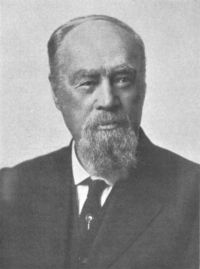
Portrait of George P. Upton George P. Upton,  The Standard Cantatas: Their Stories…

“ In Germany, however, the cantata at this time was approximating to its present form. Koch, a celebrated musical scholar of the early part of the present century, says:—
“The cantata is a lyrical poem set to music in different, alternating compositions, and sung with the accompaniment of instrumental music. The various melodies of which the whole is composed are the aria, with its subordinate species, the recitative or accompaniment, and the arioso, frequently also intermixed with choruses.”
Heydenreich, another writer of the same period, says:—
“The cantata is always lyrical.
”
Source: Gutenberg

Get perspective with Kwize: daily news enlightened by great literature