Charles Valentine Riley

Biographical details

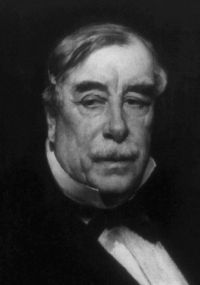
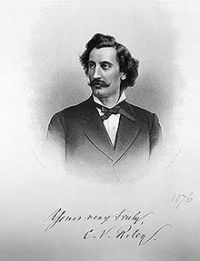
Portrait of Charles Valentine Riley Charles Valentine Riley,  Popular Science Monthly (1874)

“ We have, in the history of the grape Phylloxera, the singular spectacle of an indigenous American insect being studied, and its workings understood in a foreign land, before its presence in its most injurious form was even suspected in its native home. The Franco-Prussian War, with all its fearful consequences to France, has passed away; the five milliard francs (one thousand million dollars) have been paid, as indemnity to her victors, in so short a time that the civilized world looked on in wonder and astonishment. ”
Source: Wikisource

Portrait of Charles Valentine Riley Charles Valentine Riley,  Popular Science Monthly (1874)

“ The European vine, on the contrary, succumbs more readily, not only because of its more tender and delicate nature, but because it has not been accustomed to the disease—there being, doubtless, a parallel between this case and the well-known fact that diseases and parasites which are comparatively harmless among peoples long accustomed to them, become virulent and often fatal when first introduced among hitherto uncontaminated peoples. ”
Source: Wikisource

Portrait of Charles Valentine Riley Charles Valentine Riley,  Popular Science Monthly (1875)

“ The ravages of the insect, bad as they are, very naturally get exaggerated at such a distance from its native home, and the following from an English gardening periodical gives altogether a too gloomy picture: 'When once a field of potatoes has been attacked, all hopes of a harvest must be given up; in a few days it is changed into an arid waste, a mere mass of dried stalks.' It should not be forgotten that the American cultivator, by means of intelligence and a little Paris-green, is pretty much master of the doryphora. ”
Source: Wikisource

Get perspective with Kwize: daily news enlightened by great literature