“ Accustom thyself to believe that death is nothing to us, for good and evil imply sentience, and death is the privation of all sentience; therefore a right understanding that death is nothing to us makes the mortality of life enjoyable, not by adding to life an illimitable time, but by taking away the yearning after immortality. For life has no terrors for him who has thoroughly apprehended that there are no terrors for him in ceasing to live. Foolish, therefore, is the man who says that he fears death, not because it will pain when it comes, but because it pains in the prospect. ”
Epicurus
Biographical details

Epicurus, an ancient Greek philosopher, founded Epicureanism, a school promoting peaceful lives through liberation from fear and suffering. His teachings, based on atomism and the "swerve" that permits free will, highlighted communal living, friendship, and the dismissal of divine intervention.
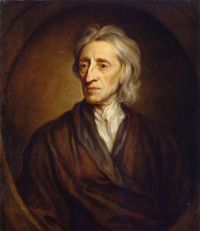
Key writings include the Letter to Menoeceus and Principal Doctrines, which detail his ethical and physical principles. Although much of his extensive body of work has been lost, his ideas significantly impacted thinkers such as John Locke and Karl Marx, influencing debates on pleasure, morality, and determinism.
Quotes by Epicurus
“ Let no one be slow to seek wisdom when he is young nor weary in the search thereof when he is grown old. For no age is too early or too late for the health of the soul. And to say that the season for studying philosophy has not yet come, or that it is past and gone, is like saying that the season for happiness is not yet or that it is now no more. ”
“ Unlimited time and limited time afford an equal amount of pleasure, if we measure the limits of that pleasure by reason. 20. The body receives as unlimited the limits of pleasure; and to provide it requires unlimited time. But the mind, grasping in thought what the end and limit of the body is, and banishing the terrors of futurity, procures a complete and perfect life, and has no longer any need of unlimited time. Nevertheless it does not shun pleasure, and even in the hour of death, when ushered out of existence by circumstances, the mind does not lack enjoyment of the best life. ”
 Epicurus,
Letter to Herodotus
(1925)
Epicurus,
Letter to Herodotus
(1925)
“ Further, the whole of being consists of bodies and space. For the existence of bodies is everywhere attested by sense itself, and it is upon sensation that reason must rely when it attempts to infer the unknown from the known. And if there were no space (which we call also void and place and intangible nature) , bodies would have nothing in which to be and through which to move, as they are plainly seen to move. Beyond bodies and space there is nothing which by mental apprehension or on its analogy we can conceive to exist. ”
“ If you reject absolutely any single sensation without stopping to discriminate with respect to that which awaits confirmation between matter of opinion and that which is already present, whether in sensation or in feelings or in any immediate perception of the mind, you will throw into confusion even the rest of your sensations by your groundless belief and so you will be rejecting the standard of truth altogether. If in your ideas based upon opinion you hastily affirm as true all that awaits confirmation as well as that which does not, you will not escape error, as you will be maintaining complete ambiguity whenever it is a case of judging between right and wrong opinion. ”
“ And ofttimes we consider pains superior to pleasures when submission to the pains for a long time brings us as a consequence a greater pleasure. While therefore all pleasure because it is naturally akin to us is good, not all pleasure is choiceworthy, just as all pain is an evil and yet not all pain is to be shunned. It is, however, by measuring one against another, and by looking at the conveniences and inconveniences, that all these matters must be judged. Sometimes we treat the good as an evil, and the evil, on the contrary, as a good. ”
Epicurus,
Letter to Herodotus
(1925)
“ We must consider the whole body in a general way to derive its permanent nature from all of them, though it is not, as it were, formed by grouping them together in the same way as when from the particles themselves a larger aggregate is made up, whether these particles be primary or any magnitudes whatsoever less than the particular whole. All these qualities, I repeat, merely give the body its own permanent nature. They all have their own characteristic modes of being perceived and distinguished, but always along with the whole body in which they inhere and never in separation from it ”
“ Wherefore prudence is a more precious thing even than philosophy; from it spring all the other virtues, for it teaches that we cannot lead a life of pleasure which is not also a life of prudence, honour, and justice; nor lead a life of prudence, honour, and justice, which is not also a life of pleasure. For the virtues have grown into one with a pleasant life, and a pleasant life is inseparable from them.Who, then, is superior in thy judgement to such a man? He holds a holy belief concerning the gods, and is altogether free from the fear of death. ”
Epicurus,
Letter to Herodotus
(1925)
“ Nay more: we are bound to believe that in the sky revolutions, solstices, eclipses, risings and settings, and the like, take place without the ministration or command, either now or in the future, of any being who it the same time enjoys perfect bliss along with immortality. For troubles and anxieties and feelings of anger and partiality do not accord with bliss, but always imply weakness and fear and dependence upon one's neighbors. Nor, again, must we hold that things which are no more than globular masses of fire, being at the same time endowed with bliss, assume these motions at will. ”
“ If the objects which are productive of pleasures to profligate persons really freed them from fears of the mind, -- the fears, I mean, inspired by celestial and atmospheric phenomena, the fear of death, the fear of pain; if, further, they taught them to limit their desires, we should never have any fault to find with such persons, for they would then be filled with pleasures to overflowing on all sides and would be exempt from all pain, whether of body or mind, that is, from all evil. ”
“ The one holds out some faint hope that we may escape if we honour the gods, while the necessity of the naturalists is deaf to all entreaties. Nor does he hold chance to be a god, as the world in general does, for in the acts of a god there is no disorder; nor to be a cause, though an uncertain one, for he believes that no good or evil is dispensed by chance to men so as to make life blessed, though it supplies the starting-point of great good and great evil. He believes that the misfortune of the wise is better than the prosperity of the fool. ”
“ The same conviction which inspires confidence that nothing we have to fear is eternal or even of long duration, also enables us to see that even in our limited conditions of life nothing enhances our security so much as friendship. ”
Epicurus,
Letter to Herodotus
(1925)
“ Again, qualities often attach to bodies without being permanent concomitants. They are not to be classed among invisible entities nor are they incorporeal. Hence, using the term “accidents” in the commonest sense, we say plainly that “accidents” have not the nature of the whole thing to which they belong, and to which, conceiving it as a whole, we give the name of body, nor that of the permanent properties without which body cannot be thought of. And in virtue of certain peculiar modes of apprehension into which the complete body always enters, each of them can be called an accident. ”
“ Destiny, which some introduce as sovereign over all things, he laughs to scorn, affirming rather that some things happen of necessity, others by chance, others through our own agency. For he sees that necessity destroys responsibility and that chance or fortune is inconstant; whereas our own actions are free, and it is to them that praise and blame naturally attach. It were better, indeed, to accept the legends of the gods than to bow beneath that yoke of destiny which the natural philosophers have imposed. ”
“ If all pleasure had been capable of accumulation, -- if this had gone on not only be recurrences in time, but all over the frame or, at any rate, over the principal parts of human nature, there would never have been any difference between one pleasure and another, as in fact there is. ”
“ Pleasure is our first and kindred good. It is the starting-point of every choice and of every aversion, and to it we come back, inasmuch as we make feeling the rule by which to judge of every good thing. And since pleasure is our first and native good, for that reason we do not choose every pleasure whatsoever, but ofttimes pass over many pleasures when a greater annoyance ensues from them. ”
Epicurus,
Letter to Herodotus
(1925)
“ Nay, in every term we use we must hold fast to all the majesty which attaches to such notions as bliss and immortality, lest the terms should generate opinions inconsistent with this majesty. Otherwise such inconsistency will of itself suffice to produce the worst disturbance in our minds. Hence, where we find phenomena invariably recurring, the invariability of the recurrence must be ascribed to the original interception and conglomeration of atoms whereby the world was formed. ”
“ It would be impossible to banish fear on matters of the highest importance, if a person did not know the nature of the whole universe, but lived in dread of what the legends tell us. Hence without the study of nature there was no enjoyment of unmixed pleasures. ”
“ For the end of all our actions is to be free from pain and fear, and, when once we have attained all this, the tempest of the soul is laid; seeing that the living creature has no need to go in search of something that is lacking, nor to look for anything else by which the good of the soul and of the body will be fulfilled. ”
Epicurus,
Letter to Herodotus
(1925)
“ For the presentations which, for example, are received in a picture or arise in dreams, or from any other form of apprehension by the mind or by the other criteria of truth, would never have resembled what we call the real and true things, had it not been for certain actual things of the kind with which we come in contact. Error would not have occurred, if we had not experienced some other movement in ourselves, conjoined with, but distinct from, the perception of what is presented. ”
“ No pleasure is in itself evil, but the things which produce certain pleasures entail annoyances many times greater than the pleasures themselves. ”
Epicurus,
Letter to Herodotus
(1925)
“ This is because the atoms in the aggregates are traveling in one direction a during the shortest continuous time, albeit they move in different directions in times so short as to be appreciable only by the reason, but frequently collide until the continuity of their motion is appreciated by sense. For the assumption that beyond the range of direct observation even the minute times conceivable by reason will present continuity of motion is not true in the case before us. Our canon is that direct observation by sense and direct apprehension by the mind are alone invariably true. ”
“ Much worse is he who says that it were good not to be born, but when once one is born to pass with all speed through the gates of Hades. For if he truly believes this, why does he not depart from life? ”
“ Of all the means which are procured by wisdom to ensure happiness throughout the whole of life, by far the most important is the acquisition of friends. ”
Epicurus,
Letter to Herodotus
(1925)
“ Hence, so long as the soul is in the body, it never loses sentience through the removal of some other part. The containing sheaths may be dislocated in whole or in part, and portions of the soul may thereby be lost; yet in spite of this the soul, if it manage to survive, will have sentience. But the rest of the frame, whether the whole of it survives or only a part, no longer has sensation, when once those atoms have departed, which, however few in number, are required to constitute the nature of soul. ”
“ But in the world, at one time men shun death as the greatest of all evils, and at another time choose it as a respite from the evils in life. The wise man does not deprecate life nor does he fear the cessation of life. The thought of life is no offence to him, nor is the cessation of life regarded as an evil. ”
“ Pleasure in the body admits no increase when once the pain of want has been removed; after that it only admits of variation. The limit of pleasure in the mind, however, is reached when we reflect on the things themselves and their congeners which cause the mind the greatest alarms. ”
“ Not the man who denies the gods worshipped by the multitude, but he who affirms of the gods what the multitude believes about them is truly impious. For the utterances of the multitude about the gods are not true preconceptions but false assumptions; hence it is that the greatest evils happen to the wicked and the greatest blessings happen to the good from the hand of the gods, seeing that they are always favourable to their own good qualities and take pleasure in men like unto themselves, but reject as alien whatever is not of their kind. ”
Epicurus,
Letter to Herodotus
(1925)
“ Again, if the void were finite, the infinity of bodies would not have anywhere to be.Furthermore, the atoms, which have no void in them—out of which composite bodies arise and into which they are dissolved—vary indefinitely in their shapes; for so many varieties of things as we see could never have arisen out of a recurrence of a definite number of the same shapes. The like atoms of each shape are absolutely infinite; but the variety of shapes, though indefinitely large, is not absolutely infinite.The atoms are in continual motion through all eternity. ”
“ Those natural desires which entail no pain when not gratified, though their objects are vehemently pursued, are also due to illusory opinion; and when they are not got rid of, it is not because of their own nature, but because of the person's illusory opinion. ”
“ First believe that God is a living being immortal and blessed, according to the notion of a god indicated by the common sense of mankind; and so believing, thou shalt not affirm of him aught that is foreign to his immortality or that agrees not with blessedness, but shalt believe about him whatever may uphold both his blessedness and his immortality. For verily there are gods, and the knowledge of them is manifest; but they are not such as the multitude believe, seeing that men do not steadfastly maintain the notions they form respecting them. ”
Epicurus,
Letter to Herodotus
(1925)
“ On the analogy of things within our experience we have declared that the atom has magnitude; and this, small as it is, we have merely reproduced on a larger scale. And further, the least and simplest things must be regarded as extremities of lengths, furnishing from themselves as units the means of measuring lengths, whether greater or less, the mental vision being employed, since direct observation is impossible. ”
“ A happy and eternal being has no trouble himself and brings no trouble upon any other being; hence he is exempt from movements of anger and partiality, for every such movement implies weakness2. Death is nothing to us; for the body, when it has been resolved into its elements, has no feeling, and that which has no feeling is nothing to us. ”
“ And even as men choose of food not merely and simply the larger portion, but the more pleasant, so the wise seek to enjoy the time which is most pleasant and not merely that which is longest. And he who admonishes the young to live well and the old to make a good end speaks foolishly, not merely because of the desirableness of life, but because the same exercise at once teaches to live well and to die well. ”
“ Those who were best able to provide themselves with the means of security against their neighbors, being thus in possession of the surest guarantee, passed the most agreeable life in each other's society; and their enjoyment of the fullest intimacy was such that, if one of them died before his time, the survivors did not mourn his death as if it called for sympathy. ”
“ Whatsoever causes no annoyance when it is present, causes only a groundless pain in the expectation. Death, therefore, the most awful of evils, is nothing to us, seeing that, when we are, death is not come, and, when death is come, we are not. ”
“ The magnitude of pleasure reaches its limit in the removal of all pain. When pleasure is present, so long as it is uninterrupted, there is no pain either of body or of mind or of both together.4. Continuous pain does not last long in the body; on the contrary, pain, if extreme, is present a short time, and even that degree of pain which barely outweighs pleasure in the body does not last for many days together. Illnesses of long duration even permit of an excess of pleasure over pain in the body. ”
“ Therefore, both old and young ought to seek wisdom, the former in order that, as age comes over him, he may be young in good things because of the grace of what has been, and the latter in order that, while he is young, he may at the same time be old, because he has no fear of the things which are to come. ”