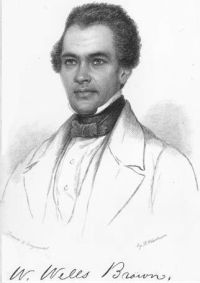
Henry Watson

Biographical details

Henry Watson,  Narrative of Henry Watson, a fugitive slave (1848)

“ I had to be extremely careful in my deportment, more attentive if possible to my duty, so that there should be no suspicion that I had made up my mind to run away; for the slaveholder watches every movement of the slave, and if he is downcast or sad,—in fact, if they are in any mood but laughing and singing, and manifesting symptoms of perfect content at heart,—they are said to have the devil in them, which is the common term; and they are often whipped or sold for their supposed wicked intentions. But as for myself, the more I reflected upon my situation, the more cheerful I appeared to be. ”

Source: Gutenberg

Henry Watson,  Narrative of Henry Watson, a fugitive slave (1848)

“ The total indifference of slaveholders to such a cold-blooded proposition, their utter unconsciousness of the paralysis of heart, and death of sympathy, and every feeling of common humanity, for the slave, which it reveals, is enough of itself to show that the tendency of the spirit of slaveholding is, to kill in the soul whatever it touches. It has no eyes to see, nor ears to hear, nor mind to understand, nor heart to feel for its victims as human beings. ”
Source: Gutenberg

Henry Watson,  Narrative of Henry Watson, a fugitive slave (1848)

“ In travelling with this man, whose name I will not mention, I had cherished the idea of being my own master; but, returning to the State of Mississippi, my hopes left me for awhile, for it is almost a matter of impossibility for a slave to escape, on account of its situation; and added to that, there are men who do nothing else but hunt fugitive slaves with hounds that are so well trained, that they do, as they advertise, take slaves without scarring them enough to injure their value. ”
Source: Gutenberg

Get perspective with Kwize: daily news enlightened by great literature