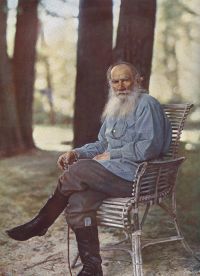
Isabel Hapgood

Biographical details

Isabel Hapgood,  Century Magazine (1895)

“ While little Sonya was thus laying the foundations of her future fame by industry, her elder sister, Aniuta, was behaving very much as any other girl would have done under the circumstances. Aniuta, who was very beautiful, talented, and gifted with a special charm of manner, had been trained to shine in society. Suddenly, just as the age arrived for her rising as a social star, she was carried off to the dullness of life in distant Palibino. Revolt was useless, as repeated attempts proved. Aniuta kept the household in a turmoil with her frantic projects for killing time. ”
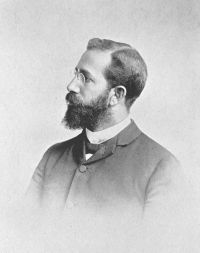
Source: Wikisource

Isabel Hapgood,  Count Tolstoi and the Public Censor (1887)

“ Another of Count Tolstoi's experiences puzzled him not a little. If he gave a beggar a few kopeks, when requested, without stopping to speak to him, the beggar looked grateful, and the Count was conscious of an agreeable sense of benevolence himself. But if he conversed with the man he felt obliged to give more, and the more he gave the more displeased the beggar appeared. The gift of ten rubles caused the beggar to look as though he had been insulted, and to walk off without saying so much as "Thank you," leaving Tolstoi feeling conscience-stricken and guilty. ”
Source: Wikisource

Isabel Hapgood,  Century Magazine (1895)

“ The one thing for which Sonya Kovalevsky was conspicuous, in spite of her masculine learning, was her feminine foibles, contradictions, and dependence. She was so essentially and hopelessly feminine that even absorption in the most exact of all sciences failed to destroy the bloom of that old-fashioned, charming ideal, except in the point of carelessness as to her attire. In ordinary life she was as helpless as a child, and to the day of her death she never learned self-reliance. ”
Source: Wikisource

Get perspective with Kwize: daily news enlightened by great literature