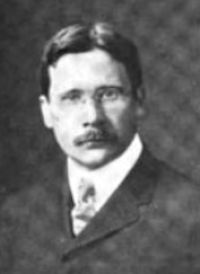
John Oakesmith

Biographical details

John Oakesmith,  The religion of Plutarch (1902)

“ It may accordingly be questioned whether Plato’s Ethics have furnished inspiration for goodness except to those who have already had a predilection for virtue as an appanage of the highest intellect, or to those more general lovers of the Beautiful whose taste is gratified by fascinating descriptions of a quality which, in itself, has no special charm for them, but which, when depicted by this “master of the starry spheres” in its atmosphere of cold but radiant splendour, has transfigured their moral life with beams that do not “fade into the common light of day.” ”
Source: Gutenberg

John Oakesmith,  The religion of Plutarch (1902)

“ The true successors of Plato in the realm of Idealism were the neo-Platonists, who maintained that “the sum total of the Ideas exists in the Divine nous, not outside of it, ‘like golden statues,’ which God must search and look up to before He can think. It is not to be supposed that He must needs run about in search of notions, perhaps not finding them at all, perhaps not recognizing them when found. This is the lot of man, whose life is spent often in the search, sometimes in the vain search, after truth. But to the Deity all knowledge is always equally present.” ”
Source: Gutenberg

John Oakesmith,  The religion of Plutarch (1902)

“ An age which attempts to reinvigorate its own ethical life by draughts of inspiration from springs hallowed by their duration from an immemorial antiquity, will naturally regret that currents, which once ran full, now flow no longer in their early strength, but have dwindled to insignificant rills, or are dried up altogether in their courses. And there is no source of religious inspiration so greatly held in honour as that which comes from the communication of mankind with the Divine Being. ”
Source: Gutenberg

Get perspective with Kwize: daily news enlightened by great literature