John Watson

Biographical details

John Watson,  The Philosophical Review (1892)

“ Like Socrates we know what reality must be, but we also know that we do not know it. Yet this very consciousness of the limitation of our sensible experience sets before our minds the idea of reality as it is in itself. We cannot, it is true, by any exercise of our intellectual faculties, pass beyond flammantia mania which shut us in, but we may none the less be able to have a reasoned faith in the existence of supersensible realities corresponding to our ideas. The world of sense is a dizzy Bacchic dance, in which no single point remains for a moment at rest. Nothing is permanent but change. ”
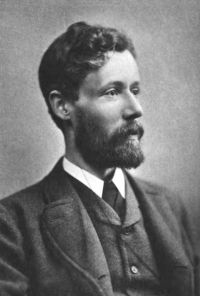
Source: Wikisource

John Watson,  The Philosophical Review (1892)

“ Kant refuses to surrender his belief that the real is the individual or self-complete, and he is therefore compelled to throw the burden of inadequacy upon our perceptive experience. But, unless we maintain the universe to be a mere chaos, and our indestructible belief in reality a dream, we must attribute the imperfection of our ordinary knowledge to a peculiarity in our own faculty of perception. This is what Kant does. Space and time, he maintains, are forms, not of reality as it is in itself, but of reality as it is for us. ”
Source: Wikisource

John Watson,  The Philosophical Review Volume 4 Number 5…

“ The ideal is the only real of which we can have any knowledge; in other words, reality is constituted for us in the continuous process by which it is determined as a thought reality. Judgment we must conceive, not as broken up into separate judgments, but as a single living self-conscious process, in which the real constitution of the world is revealed in its differentiation and integration. ”
Source: Wikisource

Get perspective with Kwize: daily news enlightened by great literature