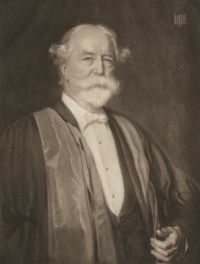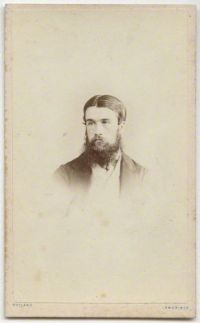
John Wesley Hales

Biographical details

Portrait of John Wesley Hales John Wesley Hales Once a Week (1860)

To take the leper to one’s own house, to wash his poor afflicted body, to wait upon his every want, and to lie by his side upon the same couch, were, we need scarcely say, acts beyond the self-denial and humility of ordinary men. They were reserved for those whose lives embodied the religious ideal of their time—men who regarded the body as given to man but to be tortured, and who deemed a moment’s carnal ease a sinful and damnable thing, only to be atoned for by years of penance and self-laceration.
Source: Wikisource

Portrait of John Wesley Hales John Wesley Hales Once a Week (1860)

Imagine the leper, in his little hut, when his position presented itself to his mind in full force. The melancholy procession has returned to the city, and those who formed it are re-united to life and to humanity. They are dispersed, each one to his own sphere of action, and the tide of energy and business is pulsing in their veins after its wont.
Source: Wikisource

Portrait of John Wesley Hales John Wesley Hales Dictionary of National Biography… (1887)

Fully as other influences have acted upon him, what strikes us is his extraordinary originality. For what is best in his best work he is debtor to no man. He is the first great figure of modern English literature, the first great humorist of modern Europe, and the first great writerm whom the dramatic spirit, so long vanished and seemingly extinct, reappears. Except Dante, there is no poet of the middle ages of superior faculty and distinction.
As to the manuscripts of Chaucer, see Furnvall's 'Six Text Edition of the Canterbury Tales, &c.,' an invaluable help to Chaucerian study.
Source: Wikisource

Get perspective with Kwize: daily news enlightened by great literature