Layamon

Definition and stakes

Walter William Skeat,  1911 Encyclopædia Britannica, Volume 16… (1911)

“ LAYAMON, early English poet, was the author of a chronicle of Britain entitled Brut, a paraphrase of the Brut d'Angleterre by Wace, a native of Jersey, who is also known as the author of the Roman de Rou. The excellent edition of Layamon by Sir F. Madden (Society of Antiquaries, London, 1847) should be consulted. All that is known concerning Layamon is derived from two extant MSS., which present texts that often vary considerably, and it is necessary to understand their comparative value before any conclusions can be drawn. ”
Source: Wikisource

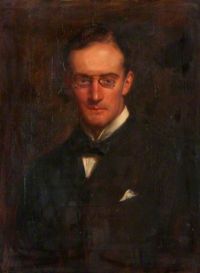
Portrait of Andrew Lang Andrew Lang,  History of English Literature from "Beowulf" to Swinburne

“ But these great touches are rare in the 30,000 lines of Layamon, the mass of his poem "is blank enough".
Layamon thought himself a chronicler in rhyme, a historian; in his book he has many tales, not that of Arthur alone; he has dull passages in plenty, none the less the good priest had many qualities of the great poet.
The verse of Layamon is sometimes of the old Anglo-Saxon sort already described, with alliteration and without rhyme; and in other parts consists of rhyming couplets varying in length, all intermixed.
”
Source: Gutenberg

Walter William Skeat,  1911 Encyclopædia Britannica, Volume 16… (1911)

“ But it absurdly substitutes “with the good knight,” which is practically meaningless, for “at a noble church.”
We know no more about Layamon except that he was a great lover of books; and that he procured three books in particular which he prized above others, “turning over the leaves, and beholding them lovingly.” These were: the English book that St Beda made; another in Latin that St Albin and St Austin made; whilst the third was made by a French clerk named Wace, who (in 1155) gave a copy to the noble Eleanor, who was queen of the high king Henry (i.e. Henry II.) .
”
Source: Wikisource

Get perspective with Kwize: daily news enlightened by great literature