“ Orm and Aslog watched her crossing the waves to the little islands; then they saw her no more.Had she descended to the music of her golden harp into the cold billows? or did she go to rule as queen in the kingdom of dwarfs? Orm and Aslog never knew her fate, but her prophecies of good were richly fulfilled.Sickness and misfortune kept far aloof from their island home. They were happy in their mutual love, strong in body, cheerful in spirit, contented even in their isolation. Their boy grew daily in beauty, strength, and obedience ”
Orm
Definition and stakes
The theme of “Orm” has been addressed by authors such as Villamaria, Israel Gollancz, Henry Bradley, J. M. D. Meiklejohn and Thomas Keightley. It is often associated with terms like Ormulum, island, Ormuzd, Ork and planet.
Quotes about “Orm”
“ At one side of this hall was another door. Orm knocked, and when again there was no answer he opened it, and stepped with Aslog by his side into a large and lofty apartment. There was no one to be seen, yet everything bore traces of an orderly hand. A bright fire burned on the hearth, and above it hung a cauldron with fish, the smell of which greeted the hungry fugitives with pleasant invitation."Forgive us, noble master of this house!" said Orm in a loud voice, yet in a respectful tone; "it is necessity, not forwardness, which makes us intruders." ”
Folk-Lore and Legends: Scandinavian
“ Orm and Aslog stood for some time dubious, and looked on with a certain degree of awe, but at last, overcome with hunger, they took up the food and ate. When they had satisfied their appetites, and still in the last beams of the setting sun, which now streamed over the island far and wide, discovered no human being, they gave way to weariness, and laid themselves in the beds to which they had been so long strangers. ”
J. M. D. Meiklejohn, A Brief History of the English Language and Literature…
“ Orm’s Ormulum.—Less than half a century after Layamon’s Brut appeared a poem called the Ormulum, by a monk of the name of Orm or Ormin. It was probably written about the year 1215. Orm was a monk of the order of St Augustine, and his book consists of a series of religious poems. It is the oldest, purest, and most valuable specimen of thirteenth-century English, and it is also remarkable for its peculiar spelling. It is written in the purest English, and not five French words are to be found in the whole poem of twenty thousand short lines. ”
Henry Bradley, 1911 Encyclopædia Britannica (1911)
“ As this William is said to have had an uncle named Orm, and probably owed his Norman name to a godfather belonging to the Amundeville family, it seems not unlikely that the author of the Ormulum and his brother Walter were his sons, named respectively after their father's uncle and his lord, and that they entered the religious house of which they had been made subjects. The name Orm is Scandinavian (Old Norse Ormr, literally “serpent,” corresponding to the Old Eng. wyrm, “worm”) , and was not uncommon in the Danish parts of England. It occurs once in the book. ”
Henry Bradley, 1911 Encyclopædia Britannica (1911)
“ ORM, or Ormin, the author of an English book, called by himself Ormulum (“because Orm made it”) , consisting of metrical homilies on the gospels read at mass. The unique MS., now in the Bodleian Library, is certainly Orm's autograph, and contains abundant corrections by his own hand. On palaeographical grounds it is referred to about A.D. 1200, and this date is supported by the linguistic evidence. The dialect is midland, with some northern features. ”
Henry Bradley, 1911 Encyclopædia Britannica (1911)
“ It must be confessed that Orm often forgets his own rules of spelling, and although hundreds of oversights are corrected by interlineation, many inconsistencies still remain. Nevertheless, the orthography of the Ormulum is the most valuable existing source of information on the development of sounds in Middle English. ”
Folk-Lore and Legends: Scandinavian
“ At least, if you should not be willing to go out of the house, keep yourselves up in the loft as quiet as possible the whole day long, and, as you value your lives, do not look down into the room until midnight is past. After that you may take possession of everything again."When the old woman had thus spoken she vanished, and Aslog and Orm, now at ease respecting their situation, lived, without any disturbance, content and happy. Orm never made a cast of his net without getting a plentiful draught. He never shot an arrow from his bow that missed its aim. ”
The English and Scottish popular ballads…
“ The king refuses daughter and land, and says he will find a champion. He offers the chance of winning so fair a may to his men, and no one dares say a word except Young Orm, who sits low [Pg 50] est at the board: he will be the man. But first Orm provides himself with an irresistible sword, which is buried in his father's tomb, and is yielded by the dead man only upon the condition that his son shall take the revenge due for his death. With this sword Orm, like the child in 'Sir Aldingar,' cuts the giant through at the knees, being, he says, not tall enough to strike higher. ”
Folk-Lore and Legends: Scandinavian
“ They ascended the mountains the whole night long till they reached a lonely spot enclosed with lofty rocks. Here Orm conducted the weary Aslog into a cave, the low and narrow entrance to which was hardly perceptible, but it soon enlarged to a great hall, reaching deep into the mountain. ”
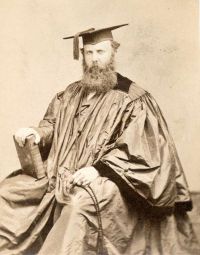 Henry Coppée,
English Literature, Considered as an Interpreter of English History
Henry Coppée,
English Literature, Considered as an Interpreter of English History
“ The Ormulum.—Next in value to the Brut of Layamon, is the Ormulum, a series of metrical homilies, in part paraphrases of the gospels for the day, with verbal additions and annotations. This was the work of a monk named Orm or Ormin, who lived in the beginning of the thirteenth century, during the reign of King John and Henry III., and it resembles our present English much more nearly than the poem of Layamon. ”
“ The gigantic limbs were freed from their petrifaction, the hair rolled down over the shoulders, the eyes began to glow once more with life. As if awaking from the sleep of death, the giant rose, seized the hand of the stately lady whose loving embrace had called him back to life, and they both turned towards the house, whither the dwarfs accompanied them with flaming torches and heart-enthralling melody. The ground seemed to tremble beneath the tread of the giants. Soon they reached the house-door. Then Orm shut the shutter,269 and groped his way back to where his wife sat beside the chimney. ”
Folk-Lore and Legends: Scandinavian
“ With these words Guru vanished. The next spring Orm took the golden horn and the silver ware to Drontheim where no one knew him. The value of the things was so great that he was able to purchase everything a wealthy man desires. He loaded his ship with his purchases, and returned to the island, where he spent many years in unalloyed happiness, and Aslog's father was soon reconciled to his wealthy son-in-law.The stone image remained sitting in the house. No human power was able to move it. So hard was the stone that hammer and axe flew in pieces without making the slightest impression upon it. ”
“ Full of love and grief, Orm's eyes rested on Aslog's pale face. Allowing himself but short rest, and that at long intervals, he rowed on all night, and when morning dawned, a large island with blossoming trees lay before his eyes bathed in the purple light. His cry of joy woke Aslog, who rose and looked at this lovely haven of refuge, which seemed offered to the homeless wanderers. Like a guardian of their future safety a tall grey rock stood upon the shore, in form not unlike a gigantic human figure. ”
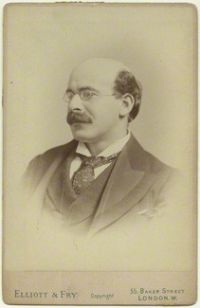 Israel Gollancz,
Dictionary of National Biography…
(1895)
Israel Gollancz,
Dictionary of National Biography…
(1895)
“ The metre, with the additional adornment of rhyme, had already been employed about 1170 in the south-western poetical homily called ‘Poema Morale’ (Old English Homilies, Early English Text Society, No. 34, ed. R. Morris) . Little can be said for Orm's poetical talent. Conscious of his deficiencies, he seems to have aimed at a sort of dignified monotony. He has, indeed, a certain sense of art in suiting word to thought, and thought and word to rhythm. His only merit is simplicity. ”
H. Bedford-Jones, The Cross and the Hammer: A Tale of the Days of the Vikings (1912)
“ Listen. "We bonders have in truth resisted your faith because, as you said just now, you preached one thing to us, and you acted another thing. We have resisted, not because we love the old gods, but because we could not see wherein the White Christ was better." Orm paused, fixing his eyes on the King's. "But to-day, King Olaf, you have shown us a new thing. We have not known you long, yet we have found in you a strong man, a proud man, a man used to ruling the wills of others, and for this we have rejoiced in a worthy King. ”
“ Sunshine and the fragrance of flowers filled the air, and they drank in life and happiness at every breath. And when winter came, the storm raged round the house, and the thick snowflakes whirled through the cracking fir branches against the window, then the little family sat cosily in their sheltered home; the dry wood blazed brightly on the hearth, and at the cheerful fireside sat Aslog making nets, while Orm carved away at a new oar, and the child listened eagerly to the tales of Old Norway. ”
 Andrew Lang,
History of English Literature from "Beowulf" to Swinburne
Andrew Lang,
History of English Literature from "Beowulf" to Swinburne
“ The metre is very like that of the Scottish rhymed version of the Psalms, though Orm (as in the second verse above) only uses rhyme by accident. The "Ormulum" is not to be "read for human pleasure," though it is interesting to students of the language and versification while in a state of transition.The same may be said of a number of works in prose or verse [Pg 53] which are to be found by students in editions published by learned societies. ”
 George Saintsbury,
Historical Manual of English Prosody
George Saintsbury,
Historical Manual of English Prosody
“ Orm—evidently, from his punctilio about spelling, [55] a man curious and particular about details—adopts the French principle of absolute syllabic uniformity; though he does not accept any of the actually existing French metres, and rejects—possibly to save trouble, possibly as thinking them unsuitable to his sacred subject—both assonance and rhyme. He writes—in the strictest and most humdrum iambic cadence, as of the least-inspired French or Latin poetry—"fifteeners" or combinations of eights and sevens. ”
The Circle of Knowledge: A Classified…
“ Ormulum (ôr ́mū-lum) .—The Ormulum is a collection of metrical homilies, one for each day of the year; but the single existing copy gives the homilies for thirty-two days only. There are very few French words in the poem, but Scandinavian words and constructions abound. The writer, Orm, or Ormin, belonged to the east of England, and he and his brother Walter were Augustinian monks. He makes no use of rhyme, but his verses are smooth and regular.Osbaldistone (os-bâl ́dis-ton) .—Rob Roy, Scott. ”
The Story of Genesis and Exodus…
“ There are other peculiarities which these works have in common; and a careful comparison of them with the Ormulum induces me to assign them to the East Midland area; but there are certain peculiarities, to be noticed hereafter, which induce me to believe that the work of Orm represents {xvi}a dialect spoken in the northern part of this district, while the Story of Genesis and Exodus, together with the Bestiary, exhibits the speech of the more southern counties of the East Midland district. ”
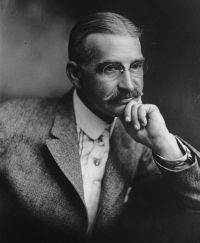 L. Frank Baum,
The Scarecrow of Oz
L. Frank Baum,
The Scarecrow of Oz
“ But one day I ate a lavender berry—as the Ork did—and immediately I grew so small that I was scarcely two inches high. It was a very unpleasant condition and like the Ork I became frightened. I could not walk very well nor very far, for every lump of earth in my way seemed a mountain, every blade of grass a tree and every grain of sand a rocky boulder. For several days I stumbled around in an agony of fear. Once a tree toad nearly gobbled me up, and if I ran out from the shelter of the bushes the gulls and cormorants swooped down upon me. ”
John R. Carling, The Viking's Skull
“ Hilda—the lady of the runic ring, you will remember. This other figure is perhaps intended for her son Magnus: if so, it is clear that he was a lad at the time of his father's death, which may account for his mother's act in hiding the treasure in Ormfell. There it was to remain till her son should be of age to defend his heritage. The roll of tapestry suspended round the tomb was evidently, when entire, a complete record in needlework of the life of Orm the Viking. It must have formed an interesting relic of Norse times. A pity we haven't the whole of it. ”
Various, Notes and Queries, Number 194, July 16…
“ Taylor, of Ormesby in Norfolk, asked some questions regarding the Danish names of places in Norfolk.In answer to them I beg to state, that all the names terminating in -by unquestionably are of Danish origin. Mr. Taylor is perfectly right in supposing that several of these names of places contain the names of the old Danish conquerors. But I do not think that Ormesby originally has been Gormsby. Gorm certainly is the same as Guthrum; but both of these names are distinctly different from the name "Orme" or "Orm," which, in our old language, signifies a serpent, and also a worm. ”
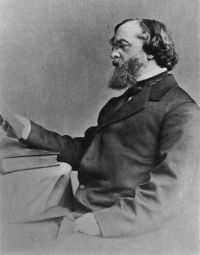 James Freeman Clarke,
Ten Great Religions: An Essay in Comparative Theology
James Freeman Clarke,
Ten Great Religions: An Essay in Comparative Theology
“ In the name of God, the giver, forgiver, rich in love, praise be to the name of Ormazd, the God with the name, 'Who always was, always is, and always will be'; the heavenly amongst the heavenly, with the name 'From whom alone is derived rule.' Ormazd is the greatest ruler, mighty, wise, creator, supporter, refuge, defender, completer of good works, overseer, pure, good, and just. ”
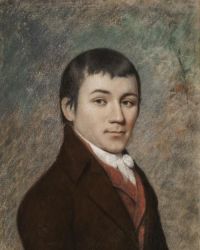 Charles Brockden Brown,
Ormond; Or, The Secret Witness…
Charles Brockden Brown,
Ormond; Or, The Secret Witness…
“ No representation will be wholly false, and some, though not perfectly, may yet be considerably exempt from error.Ormond was of all mankind the being most difficult and most deserving to be studied. A fortunate concurrence of incidents has unveiled his actions to me with more distinctness than to any other. My knowledge is far from being absolute, but I am conscious of a kind of duty, first to my friend, and secondly to mankind, to impart the knowledge I possess. ”
 Sax Rohmer,
The Cardinal’s Stair
(1917)
Sax Rohmer,
The Cardinal’s Stair
(1917)
“ Anticipating the literary woman of Fleet Street, who is so different from her writings, Margaret Orme disconcerted him. Her beauty, and the very womanliness of her surroundings, with flowers, flowers everywhere, increased rather than diminished that portentous something—that pending revelation. She was what “The Flamen” would lead one to expect her to be—and this it was that startled him. For the first time his glance caught the dull gleam of the odd ring she wore. .... ”
L. Frank Baum,
The Scarecrow of Oz
(1915)
“ Needless to say, I have never eaten again of the lavender fruit, nor do any of the beasts or birds that live upon this island eat it."They had all three listened eagerly to this amazing tale, and when it was finished the Ork exclaimed:"Do you think, then, that the deep purple berry is the antidote for the lavender one?""I'm sure of it," answered Pessim."Then lead me to the tree at once!" begged the Ork, "for this tiny form I now have terrifies me greatly."Pessim examined the Ork closely"You are ugly enough as you are," said he. "Were you any larger you might be dangerous." ”
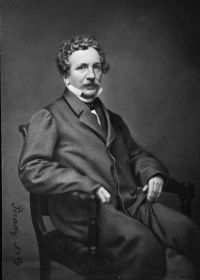
“ The dwelling of my father, Roger De l'Orme, Count de Bigorre, was perched up high upon the hill-side, about two miles from Lourdes, and looked far over all the splendid scene below. The wide valley, with its rich carpet of verdure, the river dashing in liquid diamonds amidst the rocks and over the precipices; the long far windings of the deep purple mountains, filling the mind with vague, but grand imaginings; the dark majestic shadows of the pine forest that every here and there were cast like a black mantle round the enormous limbs of each giant hill ”
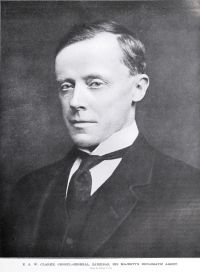 Edward Ashley Walrond Clarke,
Jaspar Tristram
(1899)
Edward Ashley Walrond Clarke,
Jaspar Tristram
(1899)
“ Just opposite him, side by side, were Orr and Els; the former, leaning back against the wall, was looking with a smile at his companion; the latter, alert and full of life, was sitting up, his hands already clenched and stretched out towards the big boy in readiness for the playful attack upon him which he was obviously intending, his eyes sparkling with fun, as now they followed the master’s retreating back, and now returned to Orr on whom, the moment that the coast was clear, he began to bear rapidly down. ”
