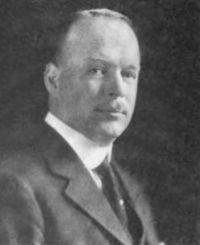
Joseph Marie Noel Valois 1911 Encyclopædia Britannica, Volume 15… (1911)

The news of the pope’s escape was received at Constance with an extraordinary outburst of rage, and led to the subversive decrees of the 4th and 5th sessions, which proclaimed the superiority of the council over the pope. Duke Frederick of Austria had hitherto sheltered John’s flight; but, laid under the ban of the empire, attacked by powerful armies, and feeling that he was courting ruin, he preferred to give up the pontiff who had trusted to him.
Source: Wikisource

Joseph Marie Noel Valois 1911 Encyclopædia Britannica, Volume 17… (1911)

The real cause of the trouble which prevails among men is the papacy, a “fictitious” power, the development of which is the result of a series of usurpations. Marsilius denies, not only to the pope, but to the bishops and clergy, any coercive jurisdiction or any right to pronounce on their own authority excommunications and interdicts, or in any way to impose the observation of the divine law.
Source: Wikisource

Joseph Marie Noel Valois 1911 Encyclopædia Britannica, Volume 6… (1911)

The execution of the surplus of the general reform of the church in its head and members was left in the hands of the future pope, who had to proceed conjointly with the council, or rather with a commission appointed by the nations—in other words, once the new pope was elected, the fathers, conscious of their impotence, were disinclined to postpone their dispersion until the laborious achievement of the reform.
Source: Wikisource

Get perspective with Kwize: daily news enlightened by great literature