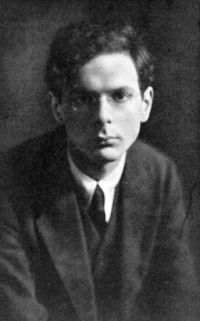
Julius West

Biographical details

Portrait of Julius West Julius West,  G. K. Chesterton, A Critical Study

“ His politics are like his perverse definitions of the meaning of such words as progress and reform. He is like a child who plays about with the hands of a clock, and makes the surprising discovery that some clocks may be made to tell a time that does not exist—with the small hand at twelve and the large at six, for example. Also that if a clock goes fast, it comes to register an hour behind the true time, and the other way round. And so Chesterton goes on playing with the times, until at last a horrid suspicion grips us. ”
Source: Gutenberg

Portrait of Julius West Julius West,  G. K. Chesterton, A Critical Study

“ She taught logic to the student and taught fairy tales to the children; it was her business to confront the nameless gods whose fear is on all flesh, and also to see that the streets were spotted with silver and scarlet, that there was a day for wearing ribbons or an hour for ringing bells.
The inhabitants of this happy realm would be instinctively democratic, and no woman would demand a vote there. They would have that exalted notion of patriotism that works outwards from the village pump to the universe at large. They would understand all humanity because they understood themselves.
”
Source: Gutenberg

Portrait of Julius West Julius West,  G. K. Chesterton, A Critical Study

“ Every child knows that the old Norse story of a sleeping Brunnhilde encircled by flames is true; to him or her, there is a Brunnhilde in every street, and the child knows that there it always has a chance of being the chosen Siegfried. But because this view of life is so much cosier than that of the grown-ups, Chesterton clings to his childhood's neat little universe and weeps pathetically when anybody mentions Herbert Spencer, and makes faces when he hears the word Newton. ”
Source: Gutenberg

Get perspective with Kwize: daily news enlightened by great literature