“ I had found Penelope grown lovelier than the loveliest figure of my boyish dreams. Yet it was as though I had found her in another world than mine, and moving among another race. She might remember the boy whom she had dragged from the mountain stream, the boy whom she had carried to the desolation of her humble home; could she long remember the awkward man who sat on the edge of his chair and scattered crumbs, who when he talked could talk only of old Bill Hansen and Stacy Shunk? The longing for the valley was gone. ”
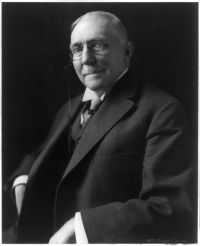
Nelson Lloyd
Biographical details
Nelson Lloyd (1859–1934) was an American author whose works explore themes of personal yearning, rural sorrow, and the tension between individual identity and societal norms. His major texts—David Malcolm, The Soldier of the Valley, and The Chronic Loafer—blend reflective storytelling with rich portrayals of regional life, frequently examining the conflict between memory and reality.
Lloyd’s writing, characterized by poetic reflection and quiet social commentary, reveals an interest in human fragility and the transient nature of aspiration. His legacy connects him to writers such as James Whitcomb Riley, yet his emphasis on psychological depth and the use of landscape as metaphor distinguishes him as a unique voice in 19th-century American literature.
Quotes by Nelson Lloyd
Nelson Lloyd, The Soldier of the Valley
“ Suppose all that had been, and you the tea-king and I the great lawyer sat here together as we sit now, smoking, could you add one note to the evening peace; would the night-hawk pay us homage by a single added ring as he circles among the clouds; would the bull-frogs in the creek sing louder to our glory; would the bleating of the sheep swing in sweeter to the music of the valley? And look at God's fireplace, I cry, pointing to the west, where the sun is heaping the glowing cloud coals among the mountains. God's fireplace? says Tim, with a queer look in his eyes. ”
Nelson Lloyd, Mrs. Radigan: Her Biography, with that of Miss Pearl Veal…
“ In life it is a comfort to know that when you are gone your name is still to live, that your bust will adorn some hall of fame, and that women's clubs will haggle over the meaning of what you have written. But to live in starvation and in ignorance of your own importance, to have the laurels placed upon a marble brow—that is different. To be in bronze in a public square is well enough, but it is better by far to have yourself in the flesh in one of the broad windows of the Ticktock Club. ”