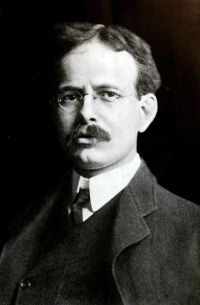
Robert P. Multhauf

Biographical details

Robert P. Multhauf,  Holcomb, Fitz, and Peate: Three 19th Century American Telescope Makers

“ In an atmosphere not unlike the intellectual democracy that characterized the formation of the Royal Society a century earlier in London, Rittenhouse began as a clockmaker and ended as president of the American Philosophical Society, our counterpart of the Royal Society, in Philadelphia. He demonstrated not merely that an instrument-maker was capable of being a scientist, but also that the work of the instrument-maker, as it had developed by the late 18th century, was in itself scientific work. ”
Source: Gutenberg

Robert P. Multhauf,  The Introduction of Self-Registering Meteorological Instruments

“ The flowering of science in the 17th century was accompanied by an efflorescence of instrument invention as luxurious as that of science itself. Although there were foreshadowing events, this flowering seems to have owed much to Galileo, whose interest in the measurement of natural phenomena is well known, and who is himself credited with the invention of the thermometer and the hydrostatic balance, both of which he devised in connection with experimentation on specific scientific problems. ”
Source: Gutenberg

Robert P. Multhauf,  Holcomb, Fitz, and Peate: Three 19th Century American Telescope Makers

“ Peate’s great mirror will shortly be put to use in a manner that could hardly have been predicted by its maker. It has been in the Smithsonian Institution for over 20 years. The huge glass will form a part of the exhibition of optics and astronomy in the new Museum of History and Technology that the Smithsonian Institution will open to the public about 1962. There it will be seen by some millions of persons each year. Because of its spectacular size it should catch the attention of most museum visitors. Surely it will awaken in more than one potentially able worker an interest in astronomy. ”
Source: Gutenberg

Get perspective with Kwize: daily news enlightened by great literature