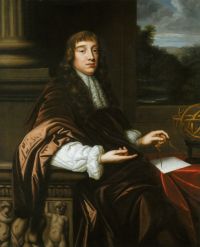
Robert Hooke

Definition and stakes

Edward Huntington Williams,  A History of Science — Volume 2

“ A slender, crooked, shrivelled-limbed, cantankerous little man, with dishevelled hair and haggard countenance, bad-tempered and irritable, penurious and dishonest, at least in his claims for priority in discoveries—this is the picture usually drawn, alike by friends and enemies, of Robert Hooke (1635-1703) , a man with an almost unparalleled genius for scientific discoveries in almost all branches of science. ”
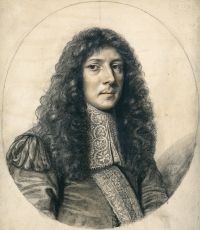
Source: Gutenberg

Flora Masson,  Robert Boyle (1914)

“ One other man there was, a mere boy in 1654, but in a way, perhaps, the most notable of them all: a little deformed man, with a pale, sharp, clever face, and lank dark hair that hung about his eyes; a man with a stooping figure and a quick step; a queer little solitary man who ate little and slept less, and worked restlessly and incessantly; a man, even in those young days, of a melancholy, jealous temper, warped by ill-health. This was Robert Hooke, who had come to Oxford in 1653, when he was eighteen, as servitor or chorister of Christ Church. ”
Source: Gutenberg

1911 Encyclopædia Britannica, Volume 13… (1911)

“ The death, in 1687, of his niece, Mrs Grace Hooke, who had lived with him for many years, caused him deep affliction; a law-suit with Sir John Cutler about his salary (decided, however, in his favour in 1696) occasioned him prolonged anxiety; and the repeated anticipation of his discoveries inspired him with a morbid jealousy. Marks of public respect were not indeed wanting to him. A degree of M.D. was conferred on him at Doctors’ Commons in 1691, and the Royal Society made him, in 1696, a grant to enable him to complete his philosophical inventions. ”
Source: Wikisource

Get perspective with Kwize: daily news enlightened by great literature