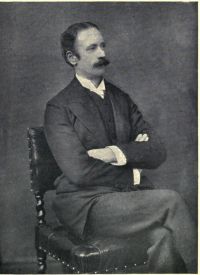
Thomas Welbank Fowle

Biographical details

Thomas Welbank Fowle Popular Science Monthly (1872)

Let us, for convenience' sake, regard the world as a vast jury, before which the various advocates of many truths, and of still more numerous errors, plead the cause of their respective clients. However much a man may wrap himself up in the consciousness of ascertained truth, and affirm that it makes no matter to him what the many believe, yet Nature is in the long-run too powerful for him, and the instinct of humanity excites him to plead the cause of what he knows to be truth, and to mourn in his heart and be sore vexed if men reject it.
Source: Wikisource

Thomas Welbank Fowle Popular Science Monthly (1872)

I need not say that I use the word morality as expressing in the widest sense all that is proper for and worthy of humanity, and not merely in the narrower sense of individual goodness. Rationalism will approach mankind rather upon the side of the virtues of the intellect. It will uphold the need of caution in our assent, the duty of absolute conviction, the self sufficiency of men, the beauty of law, the glory of working for posterity, and the true humility of being content to be ignorant where knowledge is impossible.
Source: Wikisource

Thomas Welbank Fowle Popular Science Monthly (1878)

Why does law or custom pronounce it wrong to kill one man, right to kill another? Why would my fellow-men think it right to kill me under certain circumstances? Why is the law on this and other points so unfair, so irregular, so incomplete, that were I to fashion my conduct by it alone, I should be always doing something of which I did not approve? Above all, am not I, the unit of which society is composed and for whose benefit it exists, in danger of losing my right to myself and becoming merged in a mere aggregate mass of my fellow-units?
Source: Wikisource

Get perspective with Kwize: daily news enlightened by great literature