Summary

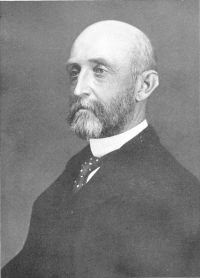
Portrait of A. T. Mahan A. T. Mahan The Gulf and Inland Waters

As they passed, the flotilla, now about three-quarters of a mile from the enemy, turned their heads down the river and followed, keeping up a brisk cannonade; the flag-ship Benton leading. The heights above the city were crowded by the citizens of Memphis, awaiting with eager hope the result of the fight. The ram attack was unexpected, and, by its suddenness and evident determination, produced some wavering in the Confederate line, which had expected to do only with the sluggish and unwieldy gunboats.
Source: Gutenberg

Portrait of A. T. Mahan A. T. Mahan The Gulf and Inland Waters

His heroic and merciful errand was not accomplished without the greatest risk, greater than he himself knew; for not only did he pass under the continued and furious fire of the fort and the fleet, but the ensign of the forecastle division of the Hartford, seeing the boat without a flag and knowing nothing of its object, but having torpedoes uppermost in his mind, connected its presence with them, trained one of his hundred-pounders upon it, [33] and was about to pull the lockstring when one of the ship's company caught his arm, saying: "For God's sake, don't fire! it is one of our own boats!"
Source: Gutenberg

Portrait of A. T. Mahan A. T. Mahan The Gulf and Inland Waters

It was felt that its fall would carry down Port Hudson also, leave the Mississippi open, and hopelessly sever the East and West. Every man, therefore, that could be moved was in motion, and though the enemy had no vessel on the river, the banks on either side swarmed with guerillas, moving rapidly from spot to spot, rarely attempting to attack any body of troops, but falling back into the interior and dispersing when followed up. Provided with numerous field pieces, they sought to cut off the transports carrying reinforcements and the steamers carrying supplies.
Source: Gutenberg

Get perspective with Kwize: daily news enlightened by great literature