“ To express a fear such as Farragut's, that a particular development of the material of war would injure the tone of the service, sounds to some as the mere echo of Lever's commissary, who reasoned that the abolition of pig-tails would sap the military spirit of the nation—only that, and nothing more. It was, on the contrary, the accurate intuition of a born master of war, who feels, even without reasoning, that men are always prone to rely upon instruments rather than upon living agents—to think the armor greater than the man. ”
Summary
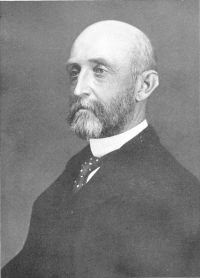
“Admiral Farragut”, is a work by A. T. Mahan. It explores elements such as Farragut, New Orleans and the United States.
Quotes from Admiral Farragut (A. T. Mahan)
“ To divert and distract the attention of the Union generals, to induce them to abandon their efforts or diminish the forces at the front, no means were so ready nor so sure as an attack upon their communications, or a threat directed against their base. To make these insecure, is like mining the foundations of a building. Here the navy removed every substantial cause of anxiety by its firm support, and by the rapidity with which its heavy guns were brought to sustain every point attacked. Under such diligent guardianship the barrier of the Mississippi remained impassable ”
“ The fact that Farragut, whose instinct for war was commonly accurate, proposed to attack her at close quarters and by night, is the best argument that Buchanan should have sought long range and daylight for his action. As it was, his headlong charge into the Union fleet was a magnificent display of inconsiderate bravery, in which such advantages as he had were recklessly thrown away. Its purpose is not clear. If, as Farragut thought, it was to sink his flag-ship, it can only be replied that an admiral's flag is not a red rag for a bull to charge. ”
“ At the same time, in the act of falling off, she approached the Essex; and her jib-boom, projecting far beyond her bows, swept over the forecastle of the latter. Porter, who had been watching the whole proceeding with great distrust, [35] had summoned his boarders as soon as the Phœbe luffed. The Essex at the moment was in a state of as absolute preparation as is a musket at full cock trained on the mark, and with the marksman's eye ranging over the sights; every man at his post, every gun trained, matches burning, and boarders standing by. ”
“ The acquirements of the accomplished officer may enable him to see the right thing to be done under given conditions, and yet fail to lift him to the height of due performance. It is in the strength of purpose, in the power of rapid decision, of instant action, and, if need be, of strenuous endurance through a period of danger or of responsibility, when the terrifying alternatives of war are vibrating in the balance, that the power of a great captain mainly lies. It is in the courage to apply knowledge under conditions of exceptional danger ”
“ The Brooklyn, a ship of the same force, had almost exactly the same number of casualties—eleven killed and forty-three wounded. Contrasting the equal suffering of the latter—delayed so long under the numerous guns of the fort, but supported by the fire of the other vessels—with that of the flag-ship, inflicted by the batteries of the enemy's gun-boats, few in number, but worked for the time with impunity, we find an excellent illustration of Farragut's oft-repeated maxim, that "to hurt your enemy is the best way to keep him from hurting you." ”
“ Stopping to fire, then moving slowly, then stopping again, the reiterated broadsides of this big ship, delivered at such close range that the combatants on either side exchanged oaths and jeers of defiance, beat down the fire of the exposed barbette batteries, and gave an admirable opportunity for slipping by to the light vessels, which brought up the rear of the column and were wholly unfit to contend with the forts. The Mississippi and Oneida keeping close behind the Pensacola and refusing to pass her, the Cayuga was thus separated from all her followers. ”
“ Talking about them at his dinner-table in New Orleans fifty years later, but a few days before his famous passage of the Mobile forts, he said: "We have no better seamen in the service to-day than those gallant fellows Bainbridge, Decatur, Hull, Perry, Porter, and Charles Stewart; and," he added, "I must not forget to mention McDonough, and poor unlucky Lawrence, as splendid-looking a sailor as I ever saw. If I only had their chance and could lay the Hartford alongside of an English ship, I should like it better than fighting our own people." ”
“ To attribute to so dubious a hope, alone, the daring act of Admiral Farragut in passing the forts and encountering the imperfectly known dangers above, is really to detract from his fame as a capable as well as gallant leader. That there were risks and accidents to be met he knew full well; that he might incur disaster he realized; that the dangers above and the power of the enemy's vessels might exceed his expectations was possible; war can not be stripped of hazard, and the anxiety of the doubtful issue is the penalty the chieftain pays for his position. ”
“ Thus ended the great battle of Mobile Bay, the crowning achievement of Farragut's naval career; "one of the hardest-earned victories of my life," to quote his own words, "and the most desperate battle I ever fought since the days of the old Essex." "You may pass through a long career and see many an action," he remarked to one of the junior officers of the Hartford, in the interval between first anchoring and the conflict with the Tennessee, "without seeing as much bloodshed as you [289] have this day witnessed." ”
“ One of the greatest of naval commanders, whose experience of men extended through an unusually long and varied career—Earl St. Vincent—has declared that the true test of a man's courage is his power to bear responsibility; and Farragut's fearlessness of responsibility in order to accomplish necessary ends, while yet captain of a single ship, was the subject of admiring comment among his subordinates, who are not usually prone to recognize that quality in their commanders. ”
“ No man could have given stronger proof than Farragut had of his perfect loyalty; but all shades of opinion were known to exist among officers of Southern origin, even when they remained in the service, and there were those who, though refusing to follow the South, would willingly have avoided striking a blow against the seceding States. Men were heard to say that they would not go with their State, but neither would they fight against her; or that they would remain in the navy, but seek employment that might spare them the pain of taking part in such a contest. ”
“ Great as was the crime of the men, they showed by their act a correct appreciation of those results to the forts, from the passage of the fleet, which some have sought to ignore—results physical, undeniable, fatal. It was not moral effect, but indisputable reasoning which sapped the further resistance of men—brave till then—to whom were wanting the habit of discipline and the appreciation of the far-reaching effects upon the fortunes of a campaign produced by a prolonged, though hopeless, resistance. ”
“ The lightness with which he clambered up the rigging of the flag-ship when entering Mobile Bay, and again over the side to see the extent of injury inflicted by the collision with the Lackawanna, sufficiently prove that up to the age of sixty-three he was capable of showing upon occasion the agility of a young man. This bodily vigor powerfully supported the energy of his mind, and carried him from daylight to dark, and from vessel to vessel of his fleet, in seasons of emergency, to see for himself that necessary work was being done without slackness ”
“ They had been so thoroughly trained as boarders that every man was prepared for such an emergency, with his cutlass as sharp as a razor, a dirk made from a file by the ship's armorer, and a pistol." With a ship well refitted and with a crew thus perfectly drilled, Porter [31] had done all that in him lay in the way of preparation for victory. If he did not win, he would at least deserve to do so. For Farragut it is interesting to notice that, in his tender youth and most impressible years, he had before him, both in his captain and in his ship, most admirable models. ”
“ Presuming confidently upon the naval weakness of the United States, and arguing from their long forbearance that insults to the flag would be indefinitely borne for the sake of the profitable commerce which neutrality insured, Great Britain, in order to support the deadly struggle in which she was engaged with France, had endeavored to shut off the intercourse of her enemy with the rest of the world, by imposing upon neutral trade restrictions before unheard of and without justification in accepted international law. ”
“ The brilliant and victorious career which has secured for Farragut a leading place among the successful naval commanders of all time was of brief duration, and began at an age when men generally are thinking rather of relaxing their efforts than of undertaking new and extraordinary labors. The two great leaders of the United States armies during the civil war—Grant and Sherman—were not over forty-five when the return of peace released them from their cares; while Nelson and Napoleon were but a year older than these when Trafalgar and Waterloo terminated their long careers. ”
“ It was not merely in the acquisition of knowledge, commonly so called, that this practice contributed to prepare Farragut for his great mission as a naval commander-in-chief, but also in the discipline of character and in the development of natural capacities admirably suited for that position. It should not be overlooked that before the war, and now again in our own day, the idea of professional improvement in the United States Navy has fastened for its fitting subject upon the development of the material of war, to the comparative exclusion of the study of naval warfare. ”
“ Take it all in all, the History promises to be the ideal American history. Not so much given to dates and battles and great events as in the fact that it is like a great panorama of the people, revealing their inner life and action. ”
“ The former daring to recklessness, yet leaving nothing to chance; fearless of responsibility, but ever sagacious in its exercise; a rigid disciplinarian, who yet tempered rigor by a profound knowledge of and sympathy with the peculiarities of the men who were under him. The latter—the ship—became, as ships under strong captains tend to become, the embodiment of the commander's spirit. Thoroughly prepared and armed at all points, she was now advancing at the close of her career to an audacious encounter with a greatly superior force. ”
“ The straits of Great Britain, however, were too dire to allow the voice of justice to override that of expediency. Had the United States Navy been a force as respectable in numbers as it was in efficiency, the same dictates of expediency might have materially controlled the action of her opponent; might have prevented outrage and averted war. As it was, right was set up against right—the right of the neutral flag on the one hand against the right of a country to the service of all her citizens on the other. ”
“ Cotton bales, cotton-laden ships and steamers on fire, and working implements of every kind such as are used in ship-yards, were continually encountered. On the piers of the levees, where were huge piles of hogsheads of sugar and molasses, a mob, composed of the scum of the city, men and women, broke and smashed without restraint. Toward noon of the 25th, as the fleet drew round the bend where the Crescent City first appears in sight, the confusion and destruction were at their height. "The levee of New Orleans," says Farragut in his report, "was one scene of desolation. ”
“ Speaking on one occasion of his gallant and accomplished fleet captain, Percival Drayton, he said: "Drayton does not know fear, and would fight the devil himself, but he believes in acting as if the enemy can never be caught unprepared; whereas I believe in judging him by ourselves, and my motto in action," he continued, quoting the celebrated words of Danton, "is, 'L'audace, et encore de l'audace, et toujours de l'audace.'"With all his fearlessness and determination, severity was not one of Admiral Farragut's characteristics. ”
“ Hillyar kept his presence of mind admirably at this critical juncture, replying in an indifferent manner that he had no intention of allowing the Phœbe to fall on board the Essex—an assurance that was well enough, and, coupled with his nonchalant manner, served the purpose of keeping Porter in doubt as to whether a breach of neutrality had been intended. But the British frigate was unquestionably in a position where a seaman should not have placed her unless he meant mischief. It is good luck, not good management, when a ship in the Phœbe's position does not foul one in that of the Essex. ”
“ Unlike the great British admiral, Nelson, no war occurred to bring his high qualities into notice; and, when lacking but a year of Nelson's age when he fell at Trafalgar, Farragut was vainly petitioning the Navy Department for the command of a sloop-of-war in the war with Mexico, although he alleged his intimate knowledge of the scene of operations, the close personal examination he had made of it, and the privilege he had had of witnessing an attack by a French squadron but a few years before. ”
“ It was the prelude to a drama of singular energy and grandeur, for the Confederates in the forts were fully on their guard, and had anticipated with unshaken courage, but with gloomy forebodings, an attack during that very night. "There will be no to-morrow for New Orleans," had said the undaunted commander of Fort Jackson the day before, "if the navy does not at once move the Louisiana to the position assigned to [152] her," close to the obstructions. The Louisiana was a powerful ironclad battery, not quite complete when Farragut entered the river. ”
“ It is, in fact, a restatement of the oft-admitted, readily-forgotten maxim that offense is the best defense. "I believe in celerity," said he, when announcing his determination soon to pass the Mississippi forts; and good reason had he to congratulate himself that this faith showed itself in his works below New Orleans, and to lament before Mobile the failure of his Government to observe the maxim which all acknowledge. "Five minutes," said Nelson, "may make the difference between victory and defeat." ”
“ As there is no reason to suppose that Farragut deliberately intended to offer the gunboat up as a forlorn hope by drawing the first fire of the enemy, always the most deadly, and thus saving the more important vessels, the disposition of her constitutes the only serious fault in his tactical arrangements on this occasion—a fault attributable not to his judgment, but to one of those concessions to human feelings which circumstances at times extort from all men. ”
“ Going on from step to step, in the vain endeavor by some means to injure the maritime predominance of Great Britain, which defied the efforts both of their navy and of their privateers, the French Legislature in January, 1798, decreed that any neutral vessel which should be found to have on board, not merely British property, but property, to whomsoever belonging, which was grown or manufactured in England or her colonies, should be a lawful prize to French cruisers. ”
“ On the 1st of January, 1863, the military forces in Galveston were attacked by Confederate troops, and the naval vessels by a number of river steamboats barricaded with cotton to resist shells fired against them, and loaded with riflemen. The garrison was captured, one of the gunboats blown up by her own officers, and another surrendered after her captain and first lieutenant had been killed on her decks. The other vessels abandoned the harbor. The affair was not only a disaster; it was attended with discreditable circumstances, which excited in the admiral indignation as well as regret. ”
“ His French biographer makes a remark, commonplace enough, which yet notes the essential difference in the lot of the two gallant men who thus casually met. "For the few who allow occasions to escape them, how many could justly complain that a chance has never been offered them? Admiral Baudin never had the opportunity to which his capacities suited him; all his aptitudes designated him for war on a great scale; a man such as he, succeeding Latouche-Tréville, would have saved us the sorrows of Trafalgar." ”
Common terms
Similar works
The Gulf and Inland Waters (A. T. Mahan…The Naval History of the United States…Dewey and Other Naval Commanders…The history of our Navy from its origin to the present day…The Hero of Manila: Dewey on the Mississippi and the Pacific…The history of our Navy from its origin to the present day…Naval battles of the world (Edward Shippen…The Naval History of the United States…Four American Naval Heroes (Mabel Borton Beebe…Appletons' Cyclopædia of American Biography…
