Summary

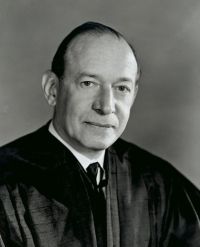
Portrait of Abe Fortas Abe Fortas Brenner v. Manson — Opinion of the Court

That proposition seems to us little more than an attempt to evade the impact of the rules which concededly govern patentability of the product itself.
This is not to say that we mean to disparage the importance of contributions to the fund of scientific information short of the invention of something 'useful,' or that we are blind to the prospect that what now seems without 'use' may tomorrow command the grateful attention of the public. But a patent is not a hunting license. It is not a reward for the search, but compensation for its successful conclusion.
Source: Wikisource

Portrait of Abe Fortas Abe Fortas Brenner v. Manson — Opinion of the Court

Whatever weight is attached to the value of encouraging disclosure and of inhibiting secrecy, we believe a more compelling consideration is that a process patent in the chemical field, which has not been developed and pointed to the degree of specific utility, creates a monopoly of knowledge which should be granted only if clearly commanded by the statute. Until the process claim has been reduced to production of a product shown to be useful, the metes and bounds of that monopoly are not capable of precise delineation.
Source: Wikisource

Portrait of Abe Fortas Abe Fortas Brenner v. Manson — Opinion of the Court

The basic quid pro quo contemplated by the Constitution and the Congress for granting a patent monopoly is the benefit derived by the public from an invention with substantial utility. Unless and until a process is refined and developed to this point-where specific benefit exists in currently available form-there is insufficient justification for permitting an applicant to engross what may prove to be a broad field.
Source: Wikisource

Get perspective with Kwize: daily news enlightened by great literature