Summary

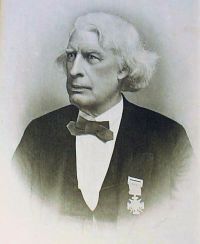
Portrait of Albert Mackey Albert Mackey The Symbolism of Freemasonry — Synoptical Index (1882)

As applied to Freemasonry, the words myth and legend are synonymous.
From this definition it will appear that the myth is really only the interpretation of an idea. But how we are to read these myths will best appear from these noble words of Max Müller: "Everything is true, natural, significant, if we enter with a reverent spirit into the meaning of ancient art and ancient language. Everything becomes false, miraculous, and unmeaning, if we interpret the deep and mighty words of the seers of old in the shallow and feeble sense of modern chroniclers."
Source: Wikisource

Portrait of Albert Mackey Albert Mackey The Symbolism of Freemasonry — Synoptical Index (1882)

But the study of the laws which maintain order in nature, released from the fetters of preconceived ideas, has led the Freemasons to that doctrine, far more moral than the contrary belief, that labor is not an expiation, but a law of harmony, from the subjection to which man cannot be released without impairing his own happiness, and deranging the order of creation. The design of Freemasons is, then, the rehabilitation of labor, which is indicated by the apron which we wear, and the gavel, the trowel, and the level, which are found among our symbols.
Source: Wikisource

Portrait of Albert Mackey Albert Mackey The Symbolism of Freemasonry — Synoptical Index (1882)

It has been said in the text that there is no essential difference between an allegory and a symbol. There is not in design, but there is this in their character: An allegory may be interpreted without any previous conventional agreement, but a symbol cannot. Thus the legend of the third degree is an allegory evidently to be interpreted as teaching a restoration to life; and this we learn from the legend itself, without any previous understanding. The sprig of acacia is a symbol of the immortality of the soul.
Source: Wikisource

Get perspective with Kwize: daily news enlightened by great literature