Summary

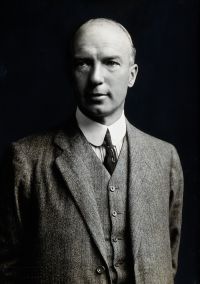
Portrait of Alexis Thomson Alexis Thomson Manual of Surgery, Sixth Edition… (1921)

Many bacteria have only the power of living upon dead matter, and are known as _saphrophytes_. Such as do nourish in living tissue are, by distinction, known as _parasites_. The power a given parasitic micro-organism has of multiplying in the body and giving rise to disease is spoken of as its _virulence_, and this varies not only with different species, but in the same species at different times and under varying circumstances.
Source: Wikisource

Portrait of Alexis Thomson Alexis Thomson Manual of Surgery, Sixth Edition… (1921)

The term _sepsis_ as now used in clinical surgery no longer retains its original meaning as synonymous with "putrefaction," but is employed to denote all conditions in which bacterial infection has taken place, and more particularly those in which pyogenic bacteria are present. In the same way the term _aseptic_ conveys the idea of freedom from all forms of bacteria, putrefactive or otherwise; and the term _antiseptic_ is used to denote a power of counteracting bacteria and their products.
Source: Wikisource

Portrait of Alexis Thomson Alexis Thomson Manual of Surgery, Sixth Edition… (1921)

So long as a person is in good health, the tissues are able to resist the attacks of moderate numbers of most bacteria. Any lowering of the vitality of the individual, however, either locally or generally, at once renders him more susceptible to infection. Thus bruised or torn tissue is much more liable to infection with pus-producing organisms than tissues clean-cut with a knife; also, after certain diseases, the liability to infection by the organisms of diphtheria, pneumonia, or erysipelas is much increased.
Source: Wikisource

Get perspective with Kwize: daily news enlightened by great literature