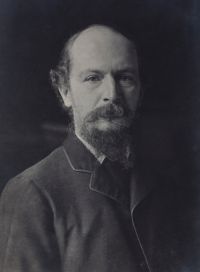
Algernon Charles Swinburne

Algernon Charles Swinburne

Summary

Portrait of Algernon Charles Swinburne Algernon Charles Swinburne Notes on Poems and Reviews (1866)

A creature at once foul and dull enough to extract from a sight so lovely, from a thing so noble, the faintest, the most fleeting idea of impurity, must be, and must remain, below comprehension and below remark. It is incredible that the meanest of men should derive from it any other than the sense of high and grateful pleasure. Odour and colour and music are not more tender or more pure. How favourite and frequent a vision among the Greeks was this of the union of sexes in one body of perfect beauty, none need be told. In Plato the legend has fallen into a form coarse, hard, and absurd.
Source: Wikisource

Portrait of Algernon Charles Swinburne Algernon Charles Swinburne Notes on Poems and Reviews (1866)

Not the martyr's ardour of selfless love, an unprofitable flame that burnt out and did no service— not the rapid rage of pleasure that seemed for a little to make the flesh divine, to clothe the naked senses with the fiery raiment of faith; but a stingless love, an innocuous desire. "Hesperia," the tenderest type of woman or of dream, born in the westward "islands of the blest," where the shadows of all happy and holy things live beyond the sunset a sacred and a sleepless life, dawns upon his eyes a western dawn, risen as the fiery day of passion goes down, and risen where it sank.
Source: Wikisource

Portrait of Algernon Charles Swinburne Algernon Charles Swinburne Notes on Poems and Reviews (1866)

No one can feel more deeply than I do the inadequacy of my work. "That is not Sappho," a friend said once to me. I could only reply, "It is as near as I can come; and no man can come close to her." Her remaining verses are the supreme success, the final achievement, of the poetic art.
But this, it may be, is not to the point. I will try to draw thither; though the descent is immeasurable from Sappho's verse to mine, or to any man's. I have striven to cast my spirit into the mould of hers, to express and represent not the poem but the poet.
Source: Wikisource

Get perspective with Kwize: daily news enlightened by great literature