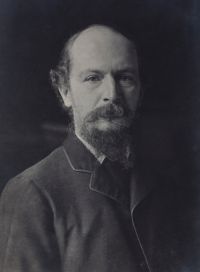
Algernon Charles Swinburne

Algernon Charles Swinburne

Summary

Portrait of Algernon Charles Swinburne Algernon Charles Swinburne Posthumous Poems — Preface (1917)

Both Leyden and Scott, who did so much to enlarge and to ensure our knowledge of ballad literature, continued to believe the true border volkslied to be a thing too rough for direct imitation. Modern ballads were defined by Sir Walter Scott as "supposed capable of uniting the vigorous numbers and wild fiction, which occasionally charm us in the ancient ballad, with a greater equality of versification, and elegance of sentiment, than we can expect to find in the works of a rude age."
Source: Wikisource

Portrait of Algernon Charles Swinburne Algernon Charles Swinburne Posthumous Poems — Preface (1917)

But still the notion persisted that a "modern" ballad must be neater, smoother and less savage than a genuine product of the old Northumbrian border.
It is doubtless to this prejudice, which was still universal sixty years ago, that we owe the fact that Swinburne's best border ballads have remained unpublished to this day. In 1862, which is the date to which we attribute "Lord Soulis" and "Lord Scales," Swinburne was in the constant society of Dante Gabriel Rossetti, to whose judgment he appealed on every occasion, and to whom all his poems were recited directly they were composed.
Source: Wikisource

Get perspective with Kwize: daily news enlightened by great literature