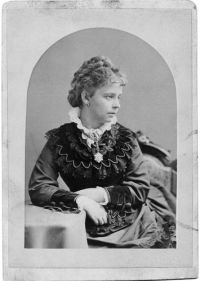
Alice Morse Earle

Alice Morse Earle

Summary

Portrait of Alice Morse Earle Alice Morse Earle Colonial days in old New York (1896)

But it was New Netherland for scarce half a century, and the name is half-forgotten, though it remained, both in outer life and in heart, a Dutch colonie, even when the province was New York and an English governor had control. In New Netherland, as in every place where the Dutch plant a colony, as in South Africa to-day, Dutch ways, Dutch notions, the Dutch tongue lingered long. To this day, Dutch influence and Dutch traits, as well as Dutch names, are ever present and are a force in New York life.
Source: Gutenberg

Portrait of Alice Morse Earle Alice Morse Earle Colonial days in old New York (1896)

In these neighborly homes thrift and simple plenty and sober satisfaction in life had full sway; and these true and honorable modes of living lingered long, even to our own day. On the outskirts of a great city, within a few miles of the centre of our greatest city, still stand some of the farmhouses of Flatbush, whose story has been told con amore by one to the manner born. These old homesteads form an object-lesson which we may heed with profit to-day, of the dignity, the happiness, the beauty that comes from simplicity in every-day life.
Source: Gutenberg

Portrait of Alice Morse Earle Alice Morse Earle Colonial days in old New York (1896)

Great hogsheads of corned beef, barrels of salt pork, hams seething in brine ere being smoked, tonnekens of salted shad and mackerel, firkins of butter, kilderkins of home-made lard, jars of pickles, kegs of pigs’ feet, or souse, tumblers of spiced fruits, graced this noble cellar. On a swing-shelf were rolliches and head-cheese and festoons of sausages. On such a solid foundation, over such a storage-room of plenty, thrift, and prudence, stood that sturdy edifice,—the home-comfort of the New York farmer.
Source: Gutenberg

Get perspective with Kwize: daily news enlightened by great literature