Summary

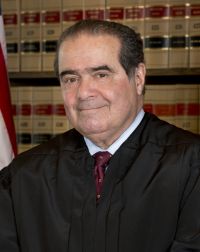
Portrait of Antonin Scalia Antonin Scalia Chisom v. Roemer — Dissenting Opinion

One's vote is diluted if it is not, as it should be, of the same practical effect as everyone else's. Of course the mere fact that an election practice satisfies the constitutional requirement of "one person, one vote" does not establish that there has been no vote dilution for Voting Rights Act purposes, since that looks not merely to equality of individual votes but also to equality of minority blocs of votes.
Source: Wikisource

Portrait of Antonin Scalia Antonin Scalia Chisom v. Roemer — Dissenting Opinion

I agree with the Court that that original legislation, directed towards intentional discrimination, applied to all elections, for it clearly said so:
"No voting qualification or prerequisite to voting, or standard, practice, or procedure shall be imposed or applied by any State or political subdivision to deny or abridge the right of any citizen of the United States to vote on account of race or color."
Source: Wikisource

Portrait of Antonin Scalia Antonin Scalia Chisom v. Roemer — Dissenting Opinion

How does one begin to decide, in such a system, how much elective strength a minority bloc ought to have? I do not assert that it is utterly impossible to impose "vote dilution" restrictions upon an electoral regime that is not based on the "one person, one vote" principle. Congress can define "vote dilution" to be whatever it will, within constitutional bounds. But my point is that "one person, one vote" is inherent in the normal concept of "vote dilution," and was an essential element of the pre-existing, judicially crafted definition under § 2
Source: Wikisource

Get perspective with Kwize: daily news enlightened by great literature