“ The one-time primitive directness of English was overrun by such forms as the ballade, the chant royal, the rondel, the kyrielle, the rondeau and the rondeau redoublé, the virelai and the pantoum, the sestina, the villanelle, and last, yet by no means least, the sonnet. But through the immense tangle of our intricate lyric growths it can now be seen that mere mechanics do not always make poetry. While rhyme has, indeed, served its limited purposes, it must be remembered that the highest English verse has been written without rhyme. ”
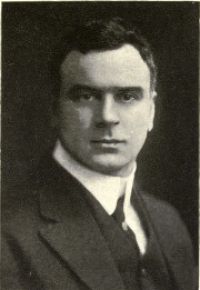
Arthur Stringer
Summary
Quotes from Open Water (Arthur Stringer)
“ It is not argued that he should ignore rhythm altogether. To do so, as has already been said, would be impossible, since life itself is sustained by the rise and fall of mortal breasts and the beat and throb of mortal hearts. Rhythm is in man's blood. The ear of the world instinctively searches for cadences. The poet's efforts towards symphonic phrasing have long since become habitual and imperative. But that he should confine himself to certain man-made laws of meter, that he should be shackled by the prosodian of the past, is quite another matter. ”
“ He must scout through the shadowy hinterlands of consciousness in attire that may be historic, yet at the same time is distressingly conspicuous. And when he begins his assault on those favouring moments or inspirational moods which lurk in the deeper valleys and by-ways of sensibility, he must begin it as a marked man, pathetically resplendent in that rigid steel which is an anachronism and no longer an armour. Rhyme, from the first, has been imposed upon him. His only escape from rhyme has been the larger utterance of blank verse. ”
