Summary

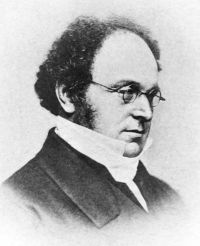
Portrait of Augustus De Morgan Augustus De Morgan First notions of logic (preparatory to the study of geometry… (1839)

We may say, ‘Either P is true, or something in contradiction of it is true;’ but we cannot say, ‘Either P is true, or every thing in contradiction of it is true.’ It is a very common mistake to imagine that the denial of a proposition gives a right to affirm the contrary; whereas it should be, that the affirmation of a proposition gives a right to deny the contrary. Thus, if we deny that Every A is B, we do not affirm that No A is B, but only that Some A is not B
Source: Gutenberg

Portrait of Augustus De Morgan Augustus De Morgan First notions of logic (preparatory to the study of geometry… (1839)

Every one should be aware that there is much false inference arising out of badness of style, which is just as injurious to the habits of the untrained reader as if the errors were mistakes of logic in the mind of the writer.
‘A is less than B; B is less than C: therefore A is less than C.’ This, at first sight, appears to be a syllogism; but, on reducing it to the usual form, we find it to be,
which is not a syllogism, since there is no middle term. Evident as the preceding is, the following additional proposition must be formed before it can be made explicitly logical.
Source: Gutenberg

Portrait of Augustus De Morgan Augustus De Morgan First notions of logic (preparatory to the study of geometry… (1839)

The converse of a proposition is that which is made by interchanging the subject and predicate, as follows:
Now, it is a fundamental and self-evident proposition, that no consequence must be allowed to assert more widely than its premises; so that, for instance, an assertion which is only of some Bs can never lead to a result which is true of all Bs. But if a proposition assert agreement or disagreement, any other proposition which asserts the same, to the same extent and no further, must be a legitimate consequence
Source: Gutenberg

Get perspective with Kwize: daily news enlightened by great literature