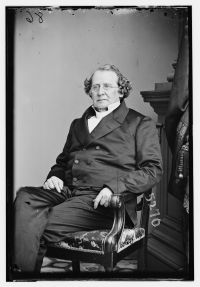
Charles Hodge

Charles Hodge

Summary

Portrait of Charles Hodge Charles Hodge The Protestant Rule of Faith (1873)

If the Bible be the work of one mind, that mind must be the mind of God. He only knows the end from the beginning. He only could know what the Bible reveals. No one, says the Apostle, knows the things of God but the Spirit of God. He only could reveal the nature, the thoughts, and purposes of God. He only could tell whether sin can be pardoned. No one knows the Son but the Father. The revelation of the person and work of Christ is as clearly the work of God as are the heavens in all their majesty and glory.
Source: Wikisource

Portrait of Charles Hodge Charles Hodge The Protestant Rule of Faith (1873)

Revelation is the act of communicating divine knowledge by the Spirit to the mind. Inspiration is the act of the same Spirit, controlling those who make the truth known to others. The thoughts, the truths made known, and the words in which they are recorded, are declared to be equally from the Spirit. This, from first to last, has been the doctrine of the Church, notwithstanding the endless diversity of speculations in which theologians have indulged on the subject. This then is the ground on which the sacred writers rested their claims. They were the mere organs of God.
Source: Wikisource

Portrait of Charles Hodge Charles Hodge The Protestant Rule of Faith (1873)

This assertion of infallibility, this claim for the divine authority of their teaching, is characteristic of the whole Bible. The sacred writers all, and everywhere, disclaim personal authority; they never rest the obligation to faith in their teachings, on their own knowledge or wisdom; they never rest it on the truth of what they taught as manifest to reason or as capable of being proved by argument. They speak as messengers, as witnesses, as organs.
Source: Wikisource

Get perspective with Kwize: daily news enlightened by great literature