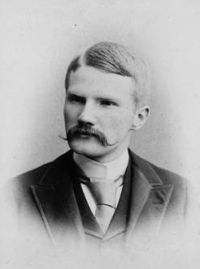
Charles Homer Haskins

Charles Homer Haskins

Summary

Portrait of Charles Homer Haskins Charles Homer Haskins The Normans in European History (1915)

Fashioned and enriched by the hand of man, the land of Normandy has in turn profoundly influenced the character of its inhabitants. First and foremost, the Norman is a peasant, industrious, tenacious, cautious, secretive, distrustful of strangers, close-fisted, shrewd, even to the point of cunning, a hard man at a bargain, eager for gain, but with the genius for small affairs rather than for great, for labor and economy rather than enterprise and daring.
Source: Wikisource

Portrait of Charles Homer Haskins Charles Homer Haskins The Normans in European History (1915)

At home and abroad the history of Normandy is a record of rich and varied achievement—of war and conquest and feats of arms, but also of law and governrment and religion, of agriculture, industry, trade, and exploration, of literature and science and art. It takes us back to Rollo and William of the Long Sword, to the Vikings and the Crusaders, to the conquerors of England and Sicily, to masterful prelates of the feudal age like Odo of Bayeux and Thomas Becket
Source: Wikisource

Portrait of Charles Homer Haskins Charles Homer Haskins The Normans in European History (1915)

And on the last evening the great abbey-church of Saint-Ouen burnt red fire for the first time in its history till the whole mass glowed and every statue and storied niche stood out with some clear, sharp bit of the Norman past, while its lantern-tower, "the crown of Normandy," shone out over the city and the river which are the centre of Norman history and where this day the dukes wore again their crown.
In this transitory world the thousandth anniversary of anything is sufficiently rare to challenge attention, even in an age which is rapidly becoming hardened to celebrations.
Source: Wikisource

Get perspective with Kwize: daily news enlightened by great literature