Summary

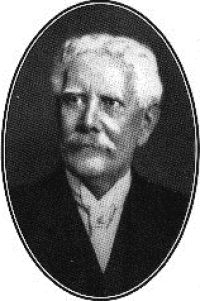
Portrait of Charles Oman Charles Oman The Art of War in the Middle Ages A.D. 378-1515

By this time the English archery was commencing to play upon them, first from the front, then from the troops concealed in the woods also. Pulling themselves together as best they could, the French lurched heavily on, sinking to the ankle or even to the knee in the sodden soil. Not one in ten of the horsemen ever reached the line of stakes, and of the infantry not a man struggled on so far. Stuck fast in the mud they stood as a target for the bowmen, at a distance of from fifty to a hundred yards from the English front.
Source: Gutenberg

Portrait of Charles Oman Charles Oman The Art of War in the Middle Ages A.D. 378-1515

When mere courage takes the place of skill and experience, tactics and strategy alike disappear. Arrogance and stupidity combine to give a certain definite colour to the proceedings of the average feudal host. The century and the land may differ, but the incidents of battle are the same: Mansoura is like Aljubarotta, Nicopolis is like Courtrai. When the enemy came in sight, nothing could restrain the Western knights: the shield was shifted into position, the lance dropped into rest, the spur touched the charger, and the mail-clad line thundered on, regardless of what might be before it.
Source: Gutenberg

Portrait of Charles Oman Charles Oman The Art of War in the Middle Ages A.D. 378-1515

The Art of War has been very simply defined as ‘the art which enables any commander to worst the forces opposed to him.’ It is therefore conversant with an enormous variety of subjects: Strategy and Tactics are but two of the more important of its branches. Besides dealing with discipline, organization, and armament, it is bound to investigate every means which can be adapted to increase the physical or moral efficiency of an army.
Source: Gutenberg

Get perspective with Kwize: daily news enlightened by great literature