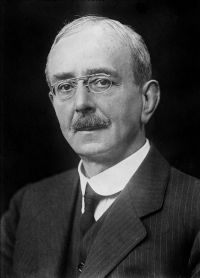
Charles Scott Sherrington

Charles Scott Sherrington

Summary

Portrait of Charles Scott Sherrington Charles Scott Sherrington 1911 Encyclopædia Britannica (1911)

Sleep is not exhaustion of the neuron in the sense that prolonged activity has reduced its excitability to zero. The nerve cell just prior to sleep is still well capable of response to stimuli, although perhaps the threshold-value of the stimulus has become rather high, whereas after entrance upon sleep and continuance of sleep for several hours, and more, when all spur to the dissimilation process has been long withheld, the threshold-value of the sensory stimulus becomes enormously higher than before.
Source: Wikisource

Portrait of Charles Scott Sherrington Charles Scott Sherrington 1911 Encyclopædia Britannica (1911)

When that area in man is injured, the ability to utter words is impaired. Not that there is paralysis of the muscles of speech, since these muscles can be used perfectly for all acts other than speech. The area in man is known as the motor centre for speech; in most persons it exists only in the left half of the brain and not in the right. In a similar way damage of a certain small portion of the temporal lobe of the brain produces loss of intelligent apprehension of words spoken, although there is no deafness and although words seen are perfectly apprehended.
Source: Wikisource

Get perspective with Kwize: daily news enlightened by great literature